Masterplanning in Kenya: when your project is too big for a single building design
A masterplan is the spatial and infrastructure framework that makes a multi-plot or multi-phase development coherent, compliant, and commercially viable. Without one, each phase is designed in isolation, infrastructure is duplicated or misaligned, and the final estate does not perform as a single asset. Here is when you need a masterplan and what it covers.
What a masterplan is and what it is not
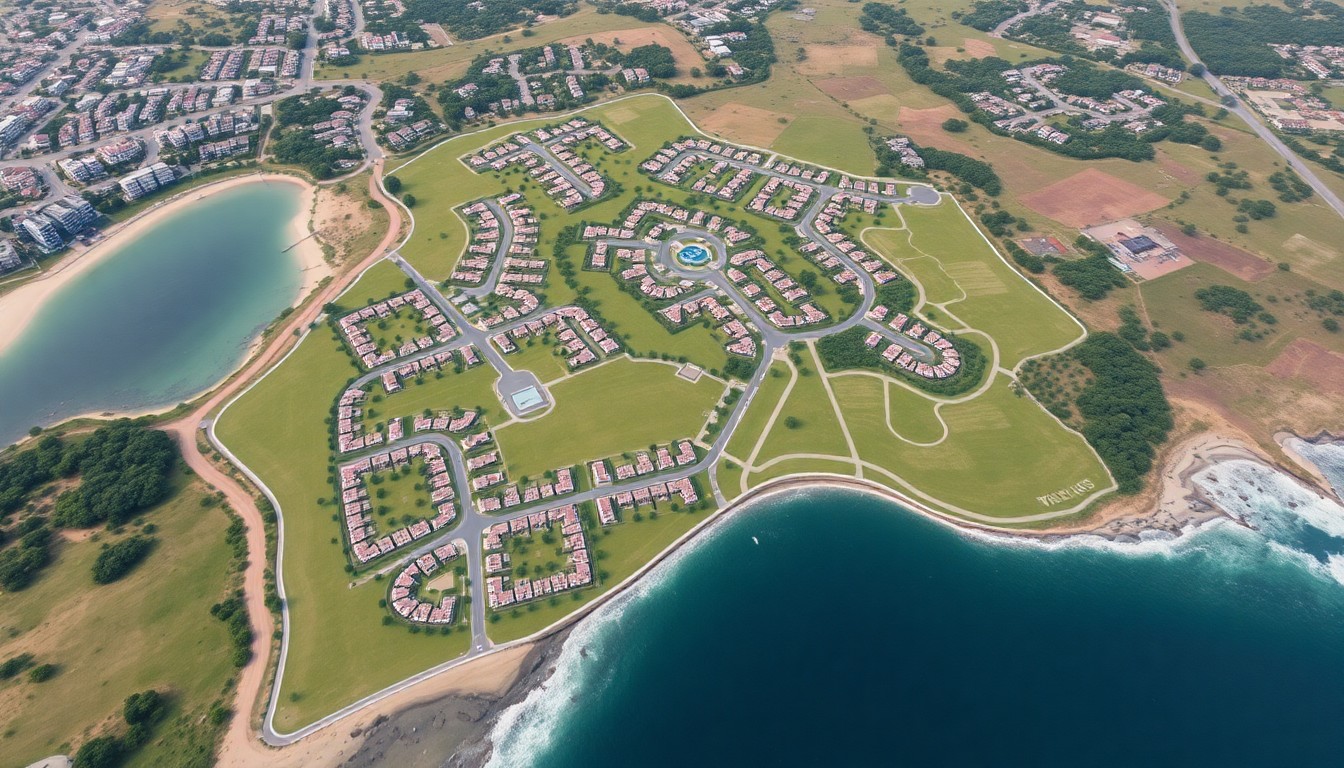
A masterplan is a spatial framework document that sets out how a site — typically above 0.5 hectares or involving multiple plots — should be developed over time. It defines land use (what goes where), infrastructure (roads, drainage, utilities), building envelopes (height, setbacks, massing), public and open spaces, and the phasing sequence for implementation.
A masterplan is not an architectural design for the buildings. It does not specify the internal layout of apartments or the structural system of an office block. It defines the rules and framework within which those buildings are designed — their position on the site, their relationship to each other, their height and bulk, and how they connect to shared infrastructure.
The distinction is important because clients sometimes confuse masterplanning with the detailed design of individual buildings. A masterplan sets the context for that design; it does not replace it. Once the masterplan is approved, individual building designs are developed by architects working within the masterplan's parameters.
Who needs a masterplan: any developer working on a site above approximately 0.5 hectares where more than one building is planned; any developer with multiple adjacent plots being assembled for a single development programme; any project with a phased implementation over 3 or more years; and any project seeking planning permission for a mixed-use estate, residential neighbourhood, or commercial park.
What a masterplan covers: the six elements
Land use plan: the allocation of different uses across the site — residential, commercial, mixed-use, institutional, open space, infrastructure corridors. The land use plan is the most fundamental masterplan decision: it determines the development quantum (how much of each use the site can support) and the financial viability of the project.
Infrastructure design: the road hierarchy (primary access, secondary roads, service roads), drainage strategy (stormwater and foul drainage), utility routes (water, power, fibre), and any shared service infrastructure. Infrastructure design at masterplan stage prevents the costly duplication and misalignment that occurs when each building phase designs its own services independently.
Building envelopes: the three-dimensional constraints within which each building on the site must be designed. Height limits, setback requirements, maximum plot coverage, and massing guidelines. Building envelopes ensure the development has coherent scale and character across phases, and that individual buildings do not prejudice the amenity of others.
Public realm and open space: the design of streets, squares, courtyards, landscaped areas, and any shared amenity spaces. In residential estates, the quality of the public realm is a significant determinant of perceived value and long-term property prices.
Design code: a written and illustrated document that defines the architectural character requirements for buildings within the masterplan area. Specification of permitted materials, façade treatment guidelines, roof form requirements, and any heritage or contextual design obligations. The design code is the contractual mechanism for maintaining coherent quality as the estate is developed by multiple architects or contractors over time.
Phasing strategy: the sequencing of development phases, with each phase defined by its land area, development programme, infrastructure requirements, and financial commitment. A well-structured phasing strategy ensures that each phase is financially self-sufficient, that infrastructure is provided ahead of demand rather than retrospectively, and that the partially-developed estate functions and looks coherent at each stage.
Masterplanning and county planning approval in Kenya
In Kenya, large-scale development projects require county planning approval under the Physical and Land Use Planning Act (2019). For projects above 5,000m² of gross floor area, or for any residential development of more than 20 units, the planning application must include a site layout plan that demonstrates compliance with the county's spatial plan, zoning provisions, and infrastructure requirements.
For estate-scale developments, the county planning department will typically require a masterplan or conceptual site layout plan as part of the pre-application consultation. This document demonstrates that the developer has considered the full site development in an integrated manner — not just the first phase of what will eventually be a much larger intervention.
NEMA's Environmental Impact Assessment (EIA) threshold for large developments triggers at the project scale, not the phase scale. A developer who plans to build in phases must still consider the cumulative environmental impact of the full development programme in the EIA, even if the first phase is below the threshold individually.
Mombasa County's Integrated Development Plan (CIDP) and spatial plans contain area-specific provisions that affect masterplan development, particularly in the coastal strip, tourist zones, and areas subject to the Coast Development Authority's jurisdiction. A GIS analysis of the development site should precede any masterplanning exercise to understand these constraints upfront.
What masterplanning costs in Kenya
Masterplanning fees in Kenya are structured as a lump sum based on the site area and complexity of the development programme. The standard fee range is KES 500,000–3,000,000 for sites of 1–5 hectares. The minimum fee is KES 500,000.
For a 2-hectare residential estate development in Mombasa — 40–80 units across 3 phases, with shared infrastructure and a design code — the masterplanning fee would typically fall in the range of KES 800,000–1,500,000, depending on the complexity of the infrastructure design and whether an EIA is required.
The masterplanning fee covers: site analysis and constraints mapping; preparation of the land use plan; infrastructure concept design; building envelope guidelines; public realm and open space strategy; design code preparation; phasing strategy; and preparation of the planning application material for county submission.
The masterplan is produced by a multidisciplinary team: the architect leads the spatial design; a civil engineer contributes the infrastructure design; a landscape architect contributes the open space and planting strategy; and the quantity surveyor provides a cost check on the infrastructure allowance within the development appraisal.
For a developer considering a site acquisition that would require masterplanning, the cost of the masterplan should be included in the pre-development cost budget — alongside the GIS analysis, survey, and feasibility study — before a purchase commitment is made.
The difference between a masterplan and a concept design
A concept design for a development site is an early-stage illustration of how a developer imagines the site being used. It is produced quickly, typically at low cost, and is used for internal decision-making or early marketing. It is not a planning document and does not carry technical authority.
A masterplan is a technical document. It is prepared by a qualified team, contains measured drawings at an appropriate scale, is supported by an infrastructure design, and is produced to a standard suitable for county planning submission and legal attachment to development agreements.
Many developers commission concept designs as a first step and then commission a masterplan only when they have decided to proceed and need county approval. This is a reasonable sequence for sites where the development potential is uncertain. For sites where the development intent is clear, commissioning the masterplan as part of the feasibility stage is more efficient — it provides the planning certainty that informs the financial model and the land acquisition price.
If you are assessing a site for estate-scale development, use the project check at `/feasibility/wizard` to understand what spatial analysis and planning documentation your project requires.
Next step
Turn this insight into a project decision
Use the free check or calculator while the question is still fresh. If the numbers make sense, continue into report delivery, capture and project setup.
Discuss your development scopeFrequently asked questions
When do I need a masterplan in Kenya?
A masterplan is typically needed for: sites above 0.5 hectares where more than one building is planned; multi-plot assemblies being developed as a single programme; phased developments over 3+ years; and any project requiring county planning approval for an estate, residential neighbourhood, or mixed-use development. For single-plot, single-building projects, a masterplan is not needed — an architectural design is sufficient.
What does a masterplan cost in Kenya?
Masterplanning fees in Kenya are structured as a lump sum of KES 500,000–3,000,000 for sites of 1–5 hectares. The minimum fee is KES 500,000. For a 2-hectare residential estate, expect KES 800,000–1,500,000 depending on programme complexity and infrastructure requirements.
Does a masterplan require county planning approval in Kenya?
Yes. For estate-scale developments, the county planning department requires a site layout plan or masterplan as part of the planning application. Under the Physical and Land Use Planning Act 2019, developments above 5,000m² GFA or more than 20 residential units require county planning permission, and the application must demonstrate integrated site planning.
What is a design code and why does a masterplan need one?
A design code is a written and illustrated document defining the architectural character requirements for buildings within the masterplan area — permitted materials, façade treatment guidelines, roof form, and any heritage requirements. It ensures that individual buildings developed by different architects or contractors over time maintain a coherent quality and character. Without a design code, estate developments often end up with incompatible building designs that reduce overall property values.
Can I phase my development without a masterplan?
Technically yes, but it is not advisable for sites above 0.5 hectares. Without a masterplan, each phase designs its own infrastructure independently. This typically results in duplicated infrastructure costs, incompatible road levels and drainage inverts between phases, and a partially-developed estate that does not function coherently. The masterplan cost is small relative to the infrastructure cost savings it enables over a multi-phase programme.