What Mombasa affordable housing projects mean for private developers
Kenya's national affordable housing programme is expanding into Mombasa. For private developers, this creates both competitive pressure and opportunity: understanding what the programme requires, where demand is real, and where the financing gaps remain will determine which private developments make sense alongside it.
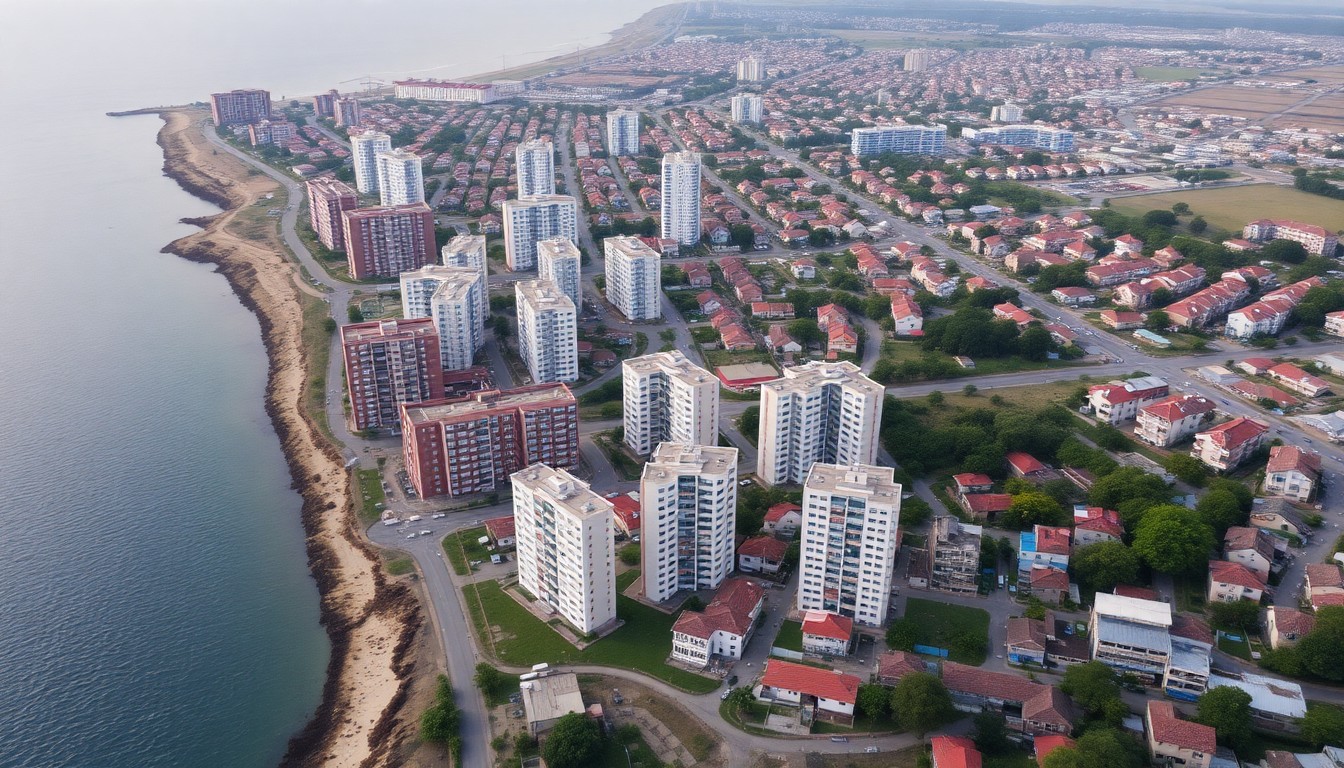
The national affordable housing programme in context
Kenya's Affordable Housing Programme (AHP) — a key pillar of the Kenya Kwanza administration's development agenda — targets the construction of 200,000 units per year nationally. In Mombasa, this has materialised in a number of ways: government land allocations, National Housing Corporation projects, county council partnerships, and the use of the Housing Levy (1.5% of gross salary) to fund construction.
As of early 2026, several affordable housing projects are at various stages in Mombasa and the wider Coast region, including developments at Buxton, Changamwe, and Likoni. The units typically target buyers or tenants in the KES 1-3 million purchase price range, with government-backed mortgage products through KMRC (Kenya Mortgage Refinance Company) and affordable housing off-plan structures.
For private developers evaluating projects in the same geography and price segment, this matters. Government-backed supply changes the demand landscape, the competitive benchmark for unit pricing, and the expectations clients bring to any project check or feasibility conversation.
Where the government programme leaves gaps
The affordable housing programme has clear targets, but the delivery reality is more complex. There are several structural gaps that create genuine opportunity for well-positioned private developers.
Location specificity. Government projects are built where land is available and politically feasible, not necessarily where employment and transport access are best. Buxton Point, for example, is relatively well connected — but many government plots are at the urban periphery, with limited access to work centres. Private developers who can secure plots closer to Mombasa CBD, Nyali, or the industrial area serve demand that government projects are not addressing.
Unit mix and specification. Affordable housing projects are standardised: typically 1BR and 2BR units at a fixed specification. Private developers can differentiate with better layout, natural ventilation, parking, and finishes — elements that a buyer at KES 4-7 million can pay a premium for over a government-standard unit at KES 1.5-2.5 million.
Tenure flexibility. Government units are primarily owner-occupier products tied to specific mortgage structures. There is significant rental demand from mid-income households who are not eligible for affordable housing mortgages or who prefer flexibility. Private developers who build for rent in the right location and specification serve a market that the programme does not touch.
Speed of delivery. Government projects in Kenya have a track record of delays — sometimes years. Private developers who can deliver faster offer time certainty that buyers and investors value, particularly those who have already committed deposits or financing.
The financing context: what KMRC and housing levies mean for buyers
The Kenya Mortgage Refinance Company has improved mortgage liquidity at the lower end of the market. KMRC refinances long-tenor mortgages issued by primary lenders — banks and housing finance companies — at rates typically below open-market lending. This has extended mortgage eligibility slightly down the income scale.
However, the practical impact on the Mombasa private development market is limited in the near term. Most private residential buyers in the KES 4-12 million range still rely on a combination of savings, employment income, and relatively expensive bank mortgages. Only a fraction qualify for KMRC-linked products, and even those who do face the documentation requirements of formal employment that exclude a significant portion of Mombasa's income base.
For private developers, this means: the cash buyer and the informally employed buyer remain the dominant demand segments. Projects designed exclusively around mortgage buyer assumptions will struggle to convert sales. The feasibility model should reflect realistic buyer profiles for the specific location and price point, not the theoretically eligible buyer population.
What a viable private development looks like alongside the AHP
Given the competitive context, what makes a private development viable in Mombasa in 2026? The answer varies by location and product type, but some clear parameters emerge from the market data and from the project checks that go through REDM.
Land acquisition cost is the primary variable. In Mombasa's coastal zone, where land prices reflect tourism premiums and limited supply, the arithmetic for affordable housing (defined as units below KES 3 million) rarely works without subsidy. Private developers who need to deliver units at this price point need either low-cost peripheral land or a significantly lower development specification.
For mid-market product — units in the KES 4-8 million range — the arithmetic is more viable on well-located plots, but only if the floor area is optimised, construction cost is tightly managed, and the unit mix is calibrated to real local demand rather than theoretical absorption rates. A feasibility model that assumes Nairobi absorption rates for a Mombasa rental development will consistently overstate revenue.
For boutique and premium product — beachfront, Nyali, Diani — the affordable housing programme is essentially irrelevant. Demand in this segment is driven by diaspora buyers, regional investors, and upper-income Nairobi residents, and is not in competition with government-backed affordable units.
The most useful thing a developer can do before committing to a site is a project check that is specific to the location, the intended unit mix, and the realistic buyer or tenant profile. REDM's feasibility model is built for this: it generates a preliminary viability assessment based on documented cost benchmarks and local market assumptions, not generic national averages.
Planning for government housing adjacency
If your proposed development site is near a confirmed government housing project, there are implications to plan for. Infrastructure investment: government housing projects typically trigger some road, water, and electricity infrastructure improvements in the surrounding area, which can increase the attractiveness of nearby private development. Market saturation: a large government supply injection in one node can soften rental or sale rates temporarily, particularly if the government units are at a similar specification. Timeline uncertainty: government project timelines in Kenya are unpredictable; a project that delays by two years could change the competitive context significantly.
The practical advice for developers in Mombasa: do not assume government supply is your primary competition unless your product is directly substitutable. If you are building at a different specification, in a different location, or for a different tenure type, the government programme is background context, not a direct competitive threat.
What matters most is that your own project has been stress-tested: construction cost is benchmarked, the revenue model is based on verifiable comparables, and the approval path is understood. That is what the REDM feasibility check establishes.
Next step
Turn this insight into a project decision
Use the free check or calculator while the question is still fresh. If the numbers make sense, continue into report delivery, capture and project setup.
Check your project viabilityFrequently asked questions
Can private developers participate in Kenya's affordable housing programme?
Yes, through public-private partnerships facilitated by the State Department for Housing or county governments. Developers can apply for participation in AHP delivery, subject to unit price caps, specification requirements, and profit sharing arrangements. Architect Darani can advise on what a PPP structure would require for a specific site.
How does the housing levy affect private developers?
The housing levy (1.5% of gross salary) funds the government's affordable housing programme and does not directly fund private projects. For private developers, the indirect effect is that it channels some potential buyer savings into the levy (reducing disposable income available for private mortgage repayments), and it funds the government competition in the entry-level price segment.
What does KMRC do and how does it help private housing development?
KMRC (Kenya Mortgage Refinance Company) refinances long-term mortgages originated by primary lenders, allowing banks to offer lower rates and longer tenors. For private developers, the benefit is that it slightly expands the pool of qualified mortgage buyers, particularly in the KES 3-8 million unit price range. However, most private development buyers in Mombasa still rely primarily on cash, family loans, or expensive bank mortgages.
Is Mombasa's housing market strong enough for a new private development in 2026?
Demand exists but varies significantly by location, price point, and product type. Well-located mid-market rental developments, diaspora-targeted beachfront products, and commercial-residential mixed-use in commercial nodes all have identifiable demand. Generic residential development at the urban periphery is more exposed to the government supply injection. A project check will give you a specific viability read for your site and product type.