Project handover in Kenya: practical completion, defects, and the final account
Practical completion is the most misunderstood milestone in Kenyan construction. It is not when the building looks finished. It is a formal contractual event with specific legal, financial, and insurance consequences. Getting it wrong — too early, too informally, or without the right documentation — leaves clients exposed and contractors off the hook.
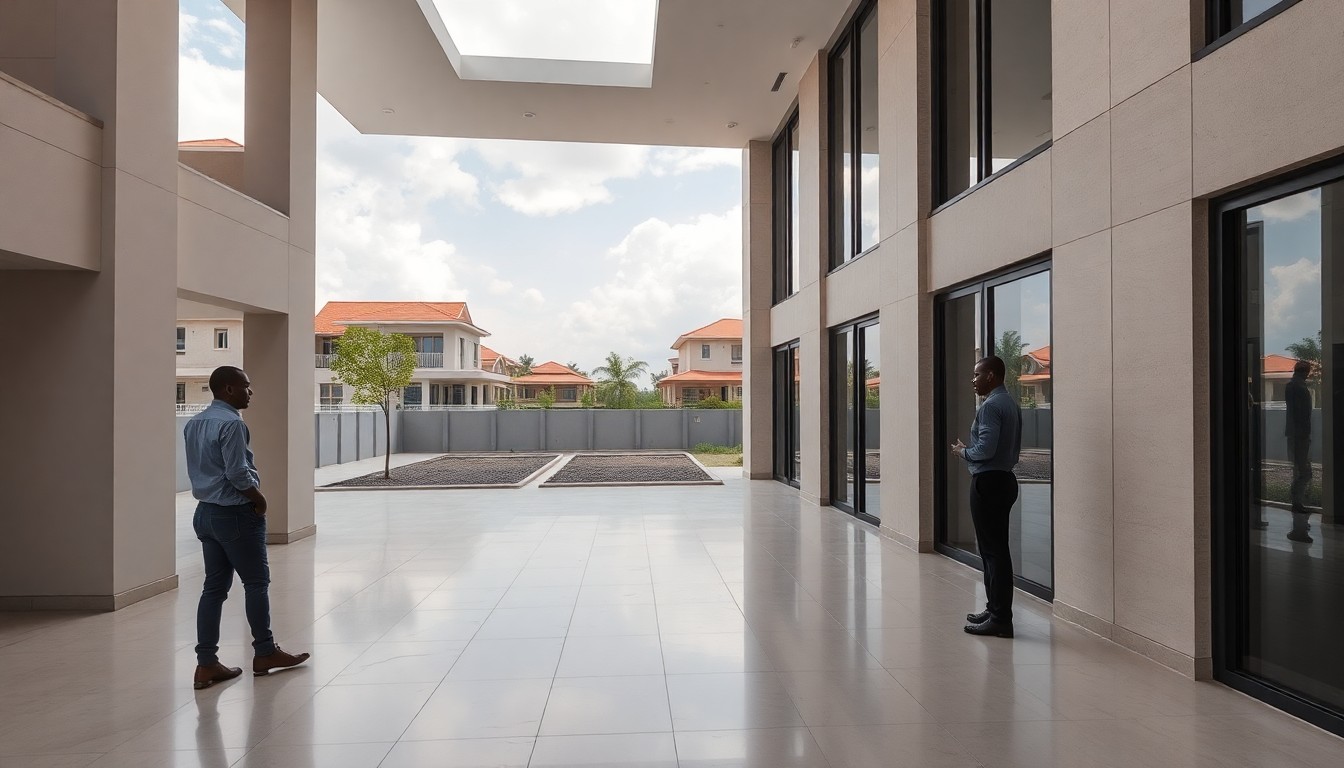
What practical completion means — and what it does not
Practical completion is the formal contractual event at which the architect or contract administrator certifies that the works are complete in all material respects, enabling the client to occupy the building for its intended use. It is a precisely defined legal concept in the construction contract — not a casual observation that the building looks ready.
Practical completion does not mean the building is perfect. It means the building is substantially complete — free from material defects that would prevent normal occupation and use. Minor or snag items that do not prevent occupation can remain at practical completion, listed in a schedule of outstanding works attached to the certificate.
What practical completion triggers: the construction programme clock stops; the contractor's design obligation (for design-and-build elements) crystallises; the defects liability period begins; the employer takes over responsibility for insuring the building; half of the retention is released to the contractor; and the 12-month limit on the employer's right to withhold retention on the unreleased half begins.
What practical completion does not trigger: the contractor's obligation to fix snag items and defects notified during the defects liability period. The contractor remains contractually obligated to rectify all defects appearing within the defects liability period, at their own cost — unless those defects arise from the employer's own use of the building.
In Kenya, practical completion is commonly treated as the point when the client 'takes over the keys' with minimal formality. This exposes both parties: the client may later discover that retention was released without proper certification, that the defects liability period was never formally constituted, or that the contractor's insurance cover lapsed at an ambiguous handover date.
The snagging process: what it covers and who manages it
Before issuing the practical completion certificate, the architect or contract administrator conducts a snagging inspection — a systematic walkthrough of all areas of the building to identify incomplete or defective work. The output is a snagging list: an itemised schedule of works that must be completed or rectified before the certificate is issued, or that are accepted as post-completion obligations attached to the certificate.
A typical snagging list for a residential building covers: painting defects (misses, runs, colour inconsistencies); tile lippage, grout gaps, or chipped tiles; door and window adjustments (stiff operation, incorrect reveal reveals, missing ironmongery); plumbing (dripping taps, slow-draining basins, missing silicone at junctions); electrical (incomplete fixture installation, missing covers, untested points); and external works (partially complete paving, missing kerb stones, incomplete landscaping).
The snagging inspection should be conducted by the contract administrator — the architect or project manager — not the client alone. Clients who conduct snagging without professional assistance regularly miss items that are not visible without technical knowledge: incorrectly installed flashings that will not present as a problem until the first heavy rain; inadequate expansion joints in floor tiles that will crack within 12 months; or concealed pipe connections that are not pressure-tested.
For multi-unit developments in Mombasa, the snagging process should include a systematic room-by-room checklist for each unit, recorded on a unit-by-unit completion matrix. This documentation becomes the baseline for retention deductions and dispute resolution if any defect claims arise later.
Contractors typically have 7–14 days from the snagging list notification to complete outstanding items. The certificate is not issued until the contract administrator is satisfied that items have been addressed. Pressure from clients or contractors to issue the certificate before this process is complete is one of the most common sources of post-completion disputes in Kenya.
The defects liability period
The defects liability period (DLP) is the period — typically 12 months from practical completion — during which the contractor is obligated to return to site and fix any defects that appear in the works at their own cost. It is not a warranty period in the consumer law sense; it is a contractual obligation running between the employer and the contractor under the construction contract.
During the DLP, the contract administrator notifies the contractor of defects as they appear. The contractor is given a reasonable period to rectify. If the contractor fails to rectify within the notified period, the employer is entitled to employ others and deduct the cost from the contractor's retention.
At the end of the DLP, the contract administrator conducts a final inspection. If no defects remain outstanding, the defects liability certificate is issued and the remaining 50% of retention is released. If defects remain, the retention is withheld until they are rectified.
In Mombasa's coastal environment, the defects that most commonly appear within the DLP include: waterproofing failures at flat roof details, balcony junctions, and basement walls; corrosion of mild steel ironmongery and fixings; delamination of external render on salt-exposed elevations; cracking at slab edge details; and leaks at pipe penetrations through slabs. A contract administrator with experience of coastal construction conditions will manage the DLP more effectively than one whose experience is confined to Nairobi's drier climate.
Common DLP failures in Kenya: the contractor is difficult to contact or mobilise; snag items are partially fixed and then abandoned; the 12-month period expires without a formal inspection; the retention is released informally without a defects certificate. Each of these failures shifts cost and risk to the client. Professional contract administration through the DLP — maintained by the same team that administered the construction contract — prevents these failure modes.
The final account
The final account is the financial reconciliation of the entire contract — the process of agreeing the final contract sum between employer and contractor, incorporating all variations, provisional sum expenditures, and any claims or counter-claims.
On most Kenyan construction projects, the final account is the most contested and most delayed post-completion process. The contractor submits a final account that includes variations instructed during construction (some of which may not have been formally priced at the time), claims for extensions of time and associated prolongation costs, and adjustments to provisional sums. The QS assesses the final account, challenges items that are not supported by instructions or substantiation, and produces a recommended final certificate.
The final account should be settled within 6 months of practical completion. In practice, it is often unresolved at 12 months and beyond, particularly where the contractor has submitted multiple claims that are disputed. Unresolved final accounts expose the employer to escalating claims and impede the project's financial close — including the release of any project finance facilities.
The QS's role in the final account process is to maintain the employer's commercial position: ensuring that only properly instructed variations are included, that extension of time claims are assessed against contractual entitlement rather than negotiated informally, and that the agreed final sum reflects the actual work done.
For clients who are approaching the end of a construction project in Kenya, the REDM handover pack (`handover_pack_v1`) provides a structured framework for managing practical completion, the snagging process, the DLP, and the final account. Discuss this with your project team via `/services`.
What you should receive at handover
The handover package is the documentation transferred from the contractor and design team to the building owner at practical completion. On many Kenyan projects, this package is either not compiled or is incomplete. The client receives keys and a set of incomplete drawings, and discovers later that the operating manuals for the lift, the M&E plant, the access control system, and the water treatment system were never handed over.
A complete handover package for a residential or commercial building should include: the as-built drawings for all disciplines (architectural, structural, MEP); operating and maintenance manuals for all installed plant and systems; test and commissioning certificates for all M&E systems (electrical installation, plumbing, HVAC); statutory compliance certificates (fire certificate, lift certificate where applicable, NEMA compliance); structural warranties from the contractor and subcontractors; and the defects liability certificate conditions.
For buildings with home automation, access control, or building management systems, the handover package must include login credentials and system configuration documentation. Failure to obtain these at handover can leave the building owner locked out of their own building management systems when the contractor relationship ends.
The completeness of the handover package should be a contractual condition for the release of the first tranche of retention at practical completion. Contractors who have not compiled documentation are motivated to do so when retention is at stake.
From defects to income: Ijarah leases after handover
Once defects are cleared and practical completion is signed, the building transitions from a construction project to an income-producing asset. For Muslim developers and investors, this phase is governed by Ijarah — the Islamic lease contract that converts rent into halal income. The lease type (gross, net, or modified gross) determines who pays rates, insurance, and maintenance — and therefore what net operating income the investor actually keeps.
During the defects liability period, tenants may already be in place under Ijarah leases. The developer must manage both: contractor defect rectification and tenant lease obligations. A leaking roof during defects is the contractor's problem under the construction contract, but it is also the tenant's complaint under the lease. Coordinate the defects period with early lease commencement — or delay lease start until defects are substantially cleared. Read the Ijarah lease structures article for gross vs net lease mechanics and the halal audit checklist for lease agreements.
Next step
Turn this insight into a project decision
Use the free check or calculator while the question is still fresh. If the numbers make sense, continue into report delivery, capture and project setup.
Discuss contract administration for your projectFrequently asked questions
What is practical completion in Kenya construction?
Practical completion is the formal contractual event certified by the architect or contract administrator confirming that the works are substantially complete and the building can be occupied for its intended use. It triggers the defects liability period, releases half the retention, transfers insurance responsibility to the employer, and starts the clock on the final account process. It is not a casual handover — it requires a formal certificate.
What is the defects liability period in Kenya?
The defects liability period (DLP) is typically 12 months from practical completion. During this period, the contractor is obligated to return and fix any defects that appear in the works at their own cost. At the end of the DLP, a defects liability certificate is issued and the remaining 50% of retention is released, provided all notified defects have been rectified.
What is retention in a construction contract?
Retention is a percentage of the contract sum (typically 5%) withheld from interim payments to the contractor as security for performance and defect rectification. Half is released at practical completion; the remaining half is released when the defects liability certificate is issued at the end of the DLP. In Kenya, retention is often the subject of dispute when it is released informally without proper certification.
What should I receive from the contractor at handover in Kenya?
A complete handover package should include: as-built drawings for all disciplines; operating and maintenance manuals for all plant and systems; test and commissioning certificates (electrical, plumbing, HVAC); statutory certificates (fire, lift where applicable, NEMA compliance); structural warranties; and system login credentials for any access control, BMS, or home automation systems. Completeness of the handover package should be a condition of retention release.
What is the final account process in construction?
The final account is the financial reconciliation of the entire contract — agreeing the final contract sum incorporating all variations, provisional sum expenditures, and any claims. It should be settled within 6 months of practical completion. The QS assesses the contractor's final account submission, challenges unsupported claims, and produces a recommended final certificate. Unresolved final accounts are one of the most common sources of post-construction disputes in Kenya.