What is a bill of quantities and why does every construction project need one?
Clients who tender construction work without a bill of quantities receive quotes they cannot compare, negotiate, or use as a contract document. The BoQ is the most effective tool for keeping contractors honest — and most clients do not know what it is until it is too late to commission one.
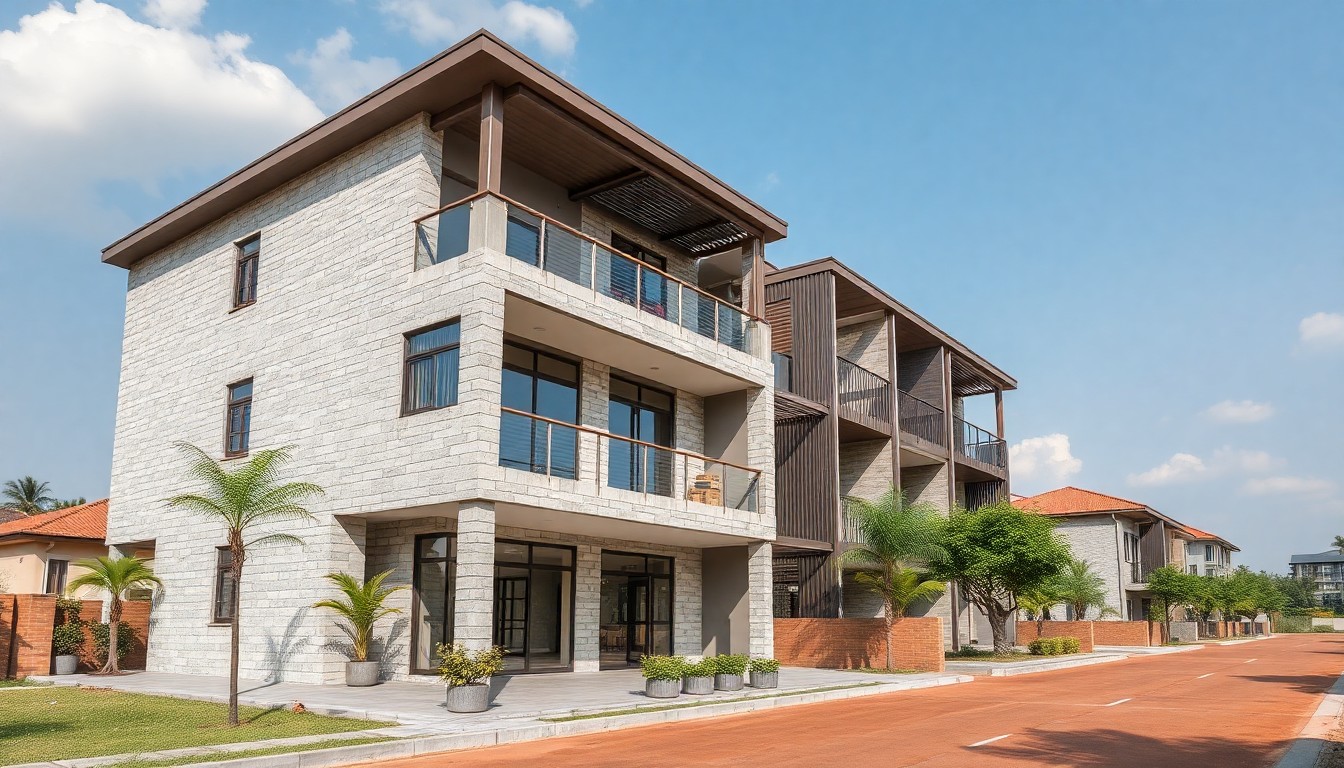
What a bill of quantities actually is
A bill of quantities (BoQ) is a structured, itemised schedule of all the works required to complete a construction project, with quantities measured from the drawings and descriptions taken from the specification. It is prepared by a quantity surveyor, and it gives every contractor tendering the project an identical basis for pricing.
A typical BoQ for a residential apartment block will run to 60–150 pages. It is divided into trade sections — preliminaries, substructure, frame, upper floors, roof, external and internal walls, finishes, fittings, drainage, external works — and within each section, items are described and measured in standard units: cubic metres of concrete, square metres of formwork, linear metres of plaster, number of doors.
Each contractor prices each item by inserting their rate. When the tenders return, the client and QS can compare like with like: two contractors' rates for reinforced concrete grade 25, two contractors' rates for 200mm blockwork, two contractors' rates for ceramic floor tiling. Without a BoQ, one contractor might include a full drainage package in their sum; another might not. One might allow for scaffolding; another might not. The numbers cannot be compared.
The BoQ, once accepted and attached to the contract, also becomes the mechanism for valuing interim payments during construction, pricing variations, and agreeing the final account. It is not only a tendering tool — it is a contract management tool for the life of the project.
What happens without a BoQ
The most common tendering practice on smaller Kenyan projects is to issue drawings to contractors and ask for a lump sum. The client receives three or four figures that may vary by 40–60% between the lowest and highest bidder. They do not know whether the lowest bidder has understood the full scope, omitted major items, or is planning to recover margin through variations.
When the cheapest contractor is appointed on a lump sum without a BoQ, a pattern tends to emerge: mobilisation proceeds, the structure rises, and somewhere in the second half of the programme variations start appearing. Items 'not included' in the lump sum. Requests for additional payments for work that a careful reading of the drawings would show was always required. The client, at that point, has very limited leverage. The contractor is on site, and stopping work costs more than paying.
The BoQ changes this dynamic entirely. With a priced BoQ forming part of the contract, the contractor cannot claim something is extra unless it genuinely departs from the described and measured works. Variations are priced against the rates already agreed in the BoQ. The QS can value each claim against a fixed reference. The client has a document, not just a handshake.
The QS's preliminary cost estimate, prepared earlier in the feasibility stage, gives the client a benchmark figure for the project. The BoQ translates that estimate into a tendering document. Together, they form the client's financial control framework for the project.
The difference between a BoQ and a cost estimate
A cost estimate is a projection of probable construction cost prepared at design stage, before detailed drawings are complete. The QS uses elemental rates — cost per square metre of floor area by building type and specification — to give the client a budget figure and a breakdown by element. This is what you use to decide whether a project is financially viable.
A bill of quantities is prepared from completed working drawings. The QS measures every item from the drawings and writes a description from the specification. This is what you use to tender the project to contractors.
Both are produced by a quantity surveyor. On a standalone appointment, the BoQ fee (0.80–1.25% of construction cost) covers the preparation of the tender BoQ, tender administration, evaluation of returned tenders, and preparation of the contract document. Where the QS has been appointed from early stage through construction, the BoQ is part of a broader scope that includes cost planning, interim valuations, variation pricing, and final account.
For most clients, the QS appointment should start at feasibility stage — so the cost plan and the BoQ form a continuous piece of financial advice, not two disconnected documents.
Who prepares a BoQ in Kenya
In Kenya, bills of quantities are prepared by quantity surveyors registered with the Board of Registration of Architects and Quantity Surveyors (BORAQS). The QS carries professional liability for the accuracy of the measurements and descriptions. On any project above a minor scale, using an unregistered person to prepare a BoQ is a risk to both the tender process and the client's legal position.
BORAQS registration requires a minimum of a degree in quantity surveying from a recognised institution, practical experience, and passing a professional assessment. The standards set by BORAQS align with the Royal Institution of Chartered Surveyors (RICS) standard method of measurement, which governs how items are described and measured.
The QS may be appointed as an individual practitioner or as part of a multidisciplinary practice. On larger projects, the QS will work alongside the architect, structural engineer, and MEP engineer as part of the design team, attending design team meetings and updating the cost plan as design decisions are made.
If you are at the stage of considering tender or procurement for a construction project, use the project check at `/feasibility/wizard` to understand what professional services apply to your scope.
BoQ fees and what they cover
A standalone BoQ appointment — commissioned after the design team has been in place and working drawings are available — is priced at 0.80–1.25% of construction cost. The minimum fee is KES 50,000. For a KES 30M construction project, this means a BoQ fee in the range of KES 240,000–375,000.
That fee covers: taking off quantities from working drawings; writing trade descriptions in accordance with the standard method of measurement; issuing the tender BoQ to contractors with the invitation to tender; collecting, checking, and abstracting returned priced BoQs; preparing the tender comparison report; negotiating with the preferred tenderer; and issuing the priced BoQ as a contract document.
Where the QS is appointed from early stage and the BoQ is part of a broader scope including cost planning, interim valuations, variation pricing, and final account, the overall QS fee rate is 3.75% of construction cost for projects between KES 10M and KES 50M. This broader appointment delivers significantly more value and is the standard of care for projects of that scale.
Clients who commission a BoQ as a standalone exercise — separate from an ongoing QS appointment — should ensure there is still a mechanism for interim valuation, variation pricing, and final account during construction. Without these, the BoQ provides tendering control but leaves the construction financial management gap open.
Next step
Turn this insight into a project decision
Use the free check or calculator while the question is still fresh. If the numbers make sense, continue into report delivery, capture and project setup.
Start a project checkFrequently asked questions
Is a bill of quantities a legal requirement in Kenya?
There is no law that mandates a BoQ for every project. However, NCA guidelines on procurement for projects above KES 5M recommend competitive tendering with comparable documentation. More practically, most experienced contractors will not price a detailed lump sum without drawings, and the resulting tender without a BoQ cannot form an adequate contract document. For any project above KES 5M, a BoQ is the professional standard.
How long does it take to prepare a BoQ?
A BoQ for a residential apartment building of 400–600m² typically takes a QS 3–4 weeks from receipt of complete working drawings. Larger or more complex projects take longer. The QS needs finalised architectural, structural, and MEP drawings to measure accurately. Issuing incomplete drawings to the QS results in a BoQ with provisional sums that undermine the tender comparison.
What does a BoQ cost in Kenya?
A standalone BoQ appointment is 0.80–1.25% of construction cost, with a minimum fee of KES 50,000. For a KES 30M project, expect to pay KES 240,000–375,000 for BoQ preparation and tender administration. Where the QS is appointed for the full project scope (cost plan through final account), the fee rate is 3.75% of construction cost for projects between KES 10M and KES 50M.
Can I reuse a BoQ from a similar project?
No. A BoQ is measured from your specific drawings and written to your specific specification. Taking rates from a previous project and inserting them into a new BoQ without remeasurement produces a document that does not accurately reflect your project scope. Contractors will price the gaps and omissions at their margin of choice.
What is the difference between a BoQ and a schedule of rates?
A BoQ contains measured quantities for your specific project — 85m³ of Grade 25 reinforced concrete, for example. A schedule of rates is a price list without quantities — a rate per m³ of concrete, for example. Schedules of rates are used for maintenance contracts or where the scope is genuinely undefined. For a new construction project, a BoQ with measured quantities is always preferable.