Bathroom design on the Kenyan coast: moisture and ventilation
Materials, extraction, and waterproofing for coastal bathrooms.
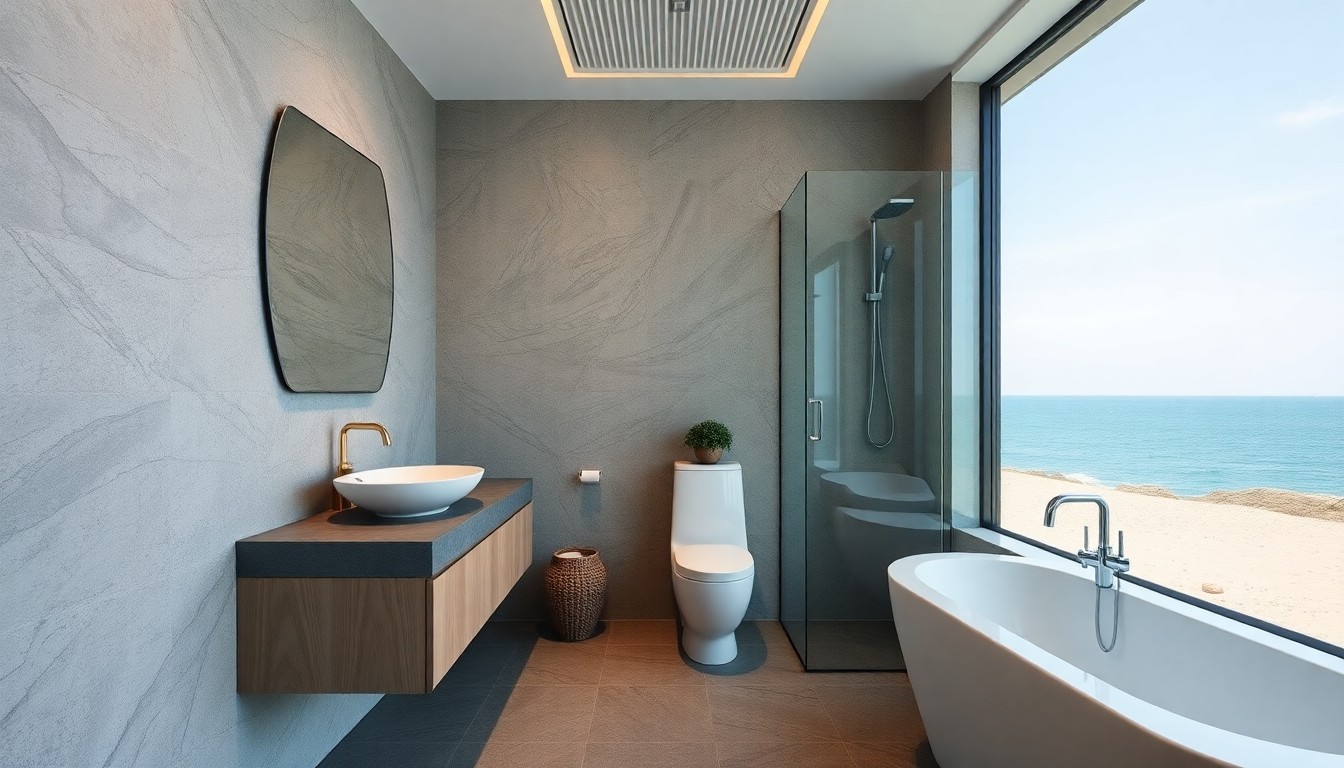
Coastal bathrooms fail on moisture, not tiles
Salt air and humidity expose weak waterproofing and under-powered extract within months. Inland-spec bathrooms on coast projects mould at ceilings and cabinet backs.
Waterproofing and falls
Wet areas need continuous tanking or membranes with tested falls to drains. Penetrations at mixers and wastes are leak points — detail them on drawings.
Extraction and make-up air
Fans must match duct length and grille losses. Run extract to atmosphere safely; avoid dumping humid air into ceiling voids shared with bedrooms.
Materials and fixings
Specify corrosion-resistant fixings, compatible adhesives, and tiles suited to wet cycling. Dark, poorly ventilated internal bathrooms need stronger extract, not only premium tiles.
Services coordination
Water heaters, manifolds, and pipe routes should be drawn before chasing. Structural sleeves for stacks reduce hacking later.
Next steps on your project
Specify fan flow rates and make-up air paths in MEP — not only tile codes on sheets.
Snag bathrooms before handover in humid weather; mould appears within weeks if extraction is wrong.
Interior scope and fees are covered in the interior design guide; design stage sequencing is in the design-stage guide.
Use plot check and project check on REDM to capture room programme before detailed drawings.
Neufert Architects' Data (searchable PDF) is indexed under design-reference/interiors/ — adapt European dimensions to Kenya by-laws and market; architect-signed room sheets override generic tables.
On Kenyan coastal projects, document every decision that affects cost, approvals, or programme in the REDM project file so consultants, lenders, and your own board see the same timeline. Informal agreements scattered across email are where disputes start.
Before the next fee milestone, confirm who signs, who certifies, and who records — then hold one coordination meeting with minutes. Developers who skip that step usually pay twice: once for rework and once for dispute advice.
Pair this guide with the design-stage and statutory approvals articles so by-law, environmental, and tender assumptions stay consistent from predesign through handover.
On Kenyan coastal projects, document every decision that affects cost, approvals, or programme in the REDM project file so consultants, lenders, and your own board see the same timeline. Informal agreements scattered across email are where disputes start.
Before the next fee milestone, confirm who signs, who certifies, and who records — then hold one coordination meeting with minutes. Developers who skip that step usually pay twice: once for rework and once for dispute advice.
Pair this guide with the design-stage and statutory approvals articles so by-law, environmental, and tender assumptions stay consistent from predesign through handover.
On Kenyan coastal projects, document every decision that affects cost, approvals, or programme in the REDM project file so consultants, lenders, and your own board see the same timeline. Informal agreements scattered across email are where disputes start.
Before the next fee milestone, confirm who signs, who certifies, and who records — then hold one coordination meeting with minutes. Developers who skip that step usually pay twice: once for rework and once for dispute advice.
Pair this guide with the design-stage and statutory approvals articles so by-law, environmental, and tender assumptions stay consistent from predesign through handover.
On Kenyan coastal projects, document every decision that affects cost, approvals, or programme in the REDM project file so consultants, lenders, and your own board see the same timeline. Informal agreements scattered across email are where disputes start.
Before the next fee milestone, confirm who signs, who certifies, and who records — then hold one coordination meeting with minutes. Developers who skip that step usually pay twice: once for rework and once for dispute advice.
Pair this guide with the design-stage and statutory approvals articles so by-law, environmental, and tender assumptions stay consistent from predesign through handover.
On Kenyan coastal projects, document every decision that affects cost, approvals, or programme in the REDM project file so consultants, lenders, and your own board see the same timeline. Informal agreements scattered across email are where disputes start.
Before the next fee milestone, confirm who signs, who certifies, and who records — then hold one coordination meeting with minutes. Developers who skip that step usually pay twice: once for rework and once for dispute advice.
Pair this guide with the design-stage and statutory approvals articles so by-law, environmental, and tender assumptions stay consistent from predesign through handover.
On Kenyan coastal projects, document every decision that affects cost, approvals, or programme in the REDM project file so consultants, lenders, and your own board see the same timeline. Informal agreements scattered across email are where disputes start.
Next step
Turn this insight into a project decision
Use the free check or calculator while the question is still fresh. If the numbers make sense, continue into report delivery, capture and project setup.
Run a free project checkFrequently asked questions
Do tiles alone solve coastal humidity?
No. Ventilation, waterproofing, and material compatibility matter more than surface finish.
What fan size is needed?
MEP engineer sizes from duct layout and room volume — not guesswork at site.
Should bathrooms have windows?
Preferred where by-laws allow; otherwise engineered extract is essential.
When is tanking required?
Typically all shower and bath zones — confirm detail with architect and waterproofing sub-contract scope.
Can REDM specify bathrooms?
REDM holds brief targets; specifications remain with design team.