Interior design in Kenya: scope, stages, and what to budget
Interior design in Kenya is consistently left to the last minute and the last budget line. The result is a completed building where fitout decisions are made under time pressure, procurement is uncoordinated, and the finish quality reflects what was left over rather than what was planned. Here is how to approach it correctly.
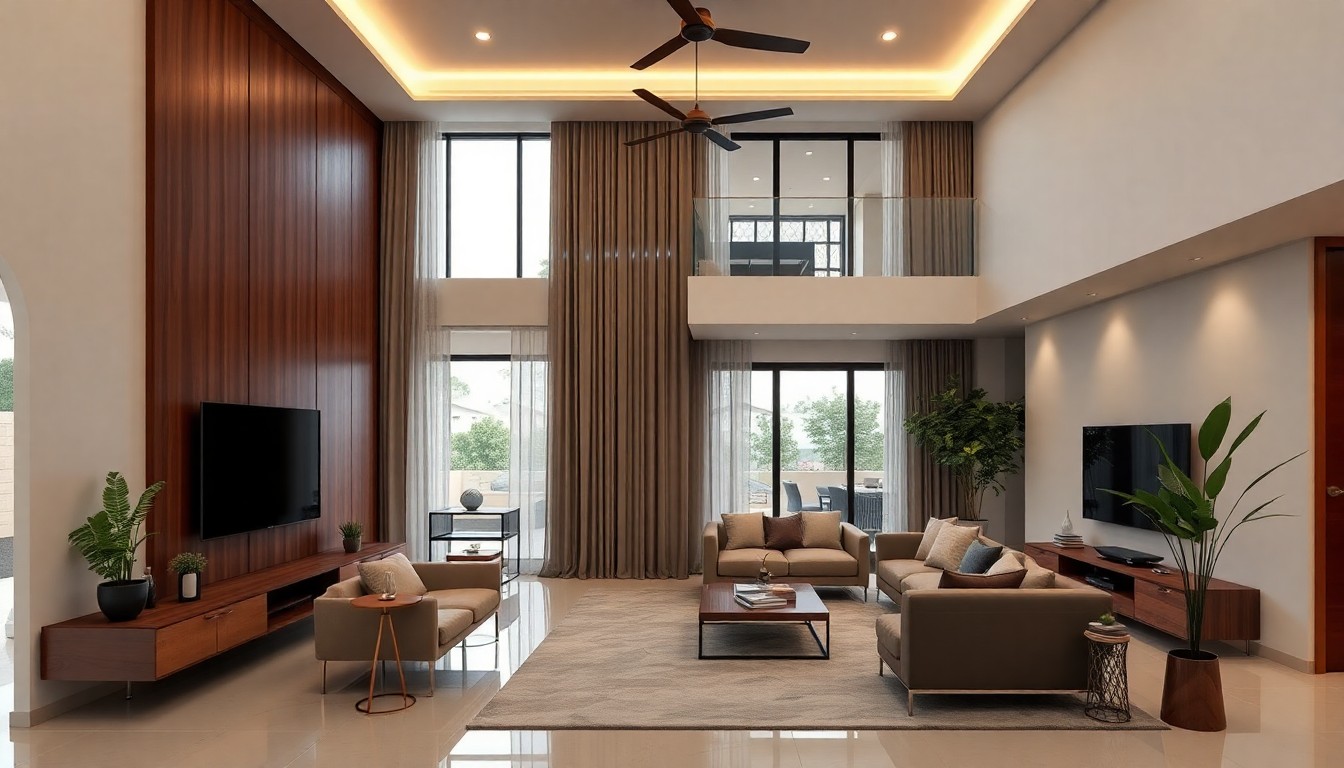
Why interior design is left to the last minute — and what it costs
The pattern is familiar on Kenyan construction projects: the building is nearly complete, the client has spent the construction budget, and someone says 'what about the interiors?' At this point, decisions are made under time pressure, finishes are chosen from what is available at the nearest suppliers, furniture is procured without a coordinated scheme, and the result is a building that functions but does not perform at the level its construction quality would support.
Interior design is most commonly treated as decoration — something applied to a finished building. It is not. Interior design is a spatial, material, and procurement discipline that should begin at scheme design stage, when the floor plan is still being refined and the specification of floor, wall, and ceiling systems is still open.
The cost of getting this wrong is real. A misaligned tile joint running through a bathroom that could have been resolved at drawing stage. A kitchen layout that does not accommodate the equipment the client actually uses. A lighting scheme added after ceiling finishes were installed that requires structural ceiling penetrations. A furniture scheme that does not fit the room dimensions because it was never drawn against a floor plan.
Interior design fees in Kenya are charged as a percentage of the fitout budget: 10% at fitout values between KES 5M and KES 20M. The minimum fee is KES 80,000. For context: a standard fitout for a 200m² apartment in Mombasa — flooring, kitchen, bathrooms, painting, joinery, lighting, soft furnishings — runs to KES 3M–8M depending on specification. The interior design fee on a KES 5M fitout at 10% is KES 500,000.
What interior design covers: the five stages
Interior design services on a building project are structured in stages that mirror the architectural design process. The interior designer should be appointed at the same time as or shortly after the architect — not at the end of construction.
Stage 1 — Briefing and concept: the interior designer reviews the architectural drawings, discusses the client's requirements (lifestyle, aesthetic direction, functional needs, budget), and prepares an interior design concept. The concept covers spatial organisation, material palette, colour direction, furniture approach, and lighting strategy. It is a vision document, not a specification.
Stage 2 — Design development: the concept is developed into detailed proposals. Floor plans showing furniture layout and traffic flow. Elevations of key walls — kitchen, bathrooms, feature walls. Reflected ceiling plans showing ceiling systems, light fitting positions, and fan/AC locations. Materials schedule showing selected floor, wall, and ceiling finishes, with samples.
Stage 3 — Documentation: the interior designer prepares the technical drawings and schedules required for the contractor to install the finishes correctly. These include: tile layout drawings with joint patterns and feature tile positions; joinery drawings for fitted kitchens, wardrobes, and storage; lighting design drawings with circuit schedules; and a detailed finishes schedule linked to the QS's bill of quantities.
Stage 4 — Procurement: the interior designer assists with sourcing furniture, fixtures, and equipment (FF&E). This includes specifying items, obtaining quotations, managing supplier relationships, and coordinating delivery to site. FF&E procurement is often where significant cost and time savings are possible — the designer's supplier relationships and knowledge of lead times prevent the last-minute retail purchasing that drives up fitout costs.
Stage 5 — Site supervision and installation: the interior designer visits site during finishes installation, checks that materials are installed as specified, manages any RFIs from the finishes contractor, and inspects the completed installation against the design intent before handover.
Interior design and architecture: the coordination requirement
Interior design and architecture are not the same discipline, but on any project above a basic residential fitout, they must be coordinated from the start. The coordination points that matter most are: floor-to-ceiling height (which determines whether suspended ceiling systems are feasible); structural grid and column positions (which affect furniture layout and spatial planning); MEP service penetrations through floors and ceilings (which affect ceiling and floor finish selection); and natural light strategy (which determines material specification — what reads well in direct coastal light does not always work under artificial light).
In Mombasa's coastal climate, interior material specification has specific implications. Humidity ranges significantly between seasons. Timber veneers and solid wood require careful specification — many species that perform well in Nairobi's drier climate will warp, swell, or delaminate in coastal humidity. Tile grout and adhesive specification must account for moisture in bathrooms and outdoor-adjacent spaces. Upholstery and carpet in tourist properties near the coast require marine-grade or treated materials for durability.
These are specification decisions, not aesthetic ones. They require an experienced interior designer who understands the material performance requirements of the coastal environment, not just the visual outcome.
What to budget for fitout in Kenya
Fitout budgeting is one of the areas where the widest variation between client expectations and actual costs occurs. There is no universal fitout cost per m² because the range is enormous — from KES 8,000/m² for basic rental apartment finishes to KES 50,000/m² or more for luxury residential or boutique hotel fitout.
A useful framework is to define three specification tiers:
Basic fitout (rental residential or standard commercial): floor tiles, painted walls, standard kitchen units, basic sanitary ware, surface-mounted lighting. Range: KES 8,000–15,000 per m² of gross internal area.
Standard fitout (owner-occupied residential or mid-market hotel): premium tiles, feature finishes in key areas, fitted kitchen with stone countertop, quality sanitary ware, suspended ceiling in wet areas, coordinated lighting. Range: KES 15,000–28,000 per m².
Luxury fitout (high-end residential, boutique hotel, prestige commercial): imported stone, timber joinery, bespoke furniture, architectural lighting design, home automation integration, high-specification sanitary ware and fittings. Range: KES 28,000–60,000+ per m².
For a 200m² apartment at standard specification, the fitout budget is approximately KES 3M–5.6M. Interior design at 10% of a KES 4M fitout is KES 400,000 — and the benefit is a coordinated result rather than an assembled collection of individually chosen finishes.
The fitout budget should be established at feasibility stage and included in the total development cost. Treating it as a separate post-construction decision consistently results in overspend against an undefined baseline.
When to appoint your interior designer
The interior designer should be appointed at scheme design stage — when the architect is preparing the floor plan layout. This is the point when spatial decisions are still open: room proportions, ceiling heights, window positions and sizes, wet area locations. Interior design input at this stage costs nothing extra and prevents decisions that are expensive to reverse.
The minimum acceptable appointment point is at design development stage — when the architect's detailed drawings are being prepared. This allows the interior designer to coordinate finishes with the architectural specification and produce documentation in time for the BoQ and contractor tender.
Appointing an interior designer after practical completion — at the fitout stage — is the most expensive option. The building structure, MEP infrastructure, and ceiling systems are fixed. The designer works within constraints that a timely appointment would have resolved.
Use the project check at `/feasibility/wizard` to understand the professional appointment sequence for your specific project, including when interior design should be introduced.
Next step
Turn this insight into a project decision
Use the free check or calculator while the question is still fresh. If the numbers make sense, continue into report delivery, capture and project setup.
Start a project checkFrequently asked questions
What does interior design cost in Kenya?
Interior design fees in Kenya are charged as a percentage of the fitout budget. The standard rate is 10% for fitout values between KES 5M and KES 20M. The minimum fee is KES 80,000. For a KES 5M fitout, the interior design fee is KES 500,000. This covers briefing, concept, design development, documentation, procurement assistance, and site supervision.
What is the difference between interior design and interior decoration?
Interior decoration is the selection of colours, soft furnishings, and accessories — typically applied to a finished space. Interior design is a technical discipline covering space planning, finishes specification, joinery design, lighting design, and FF&E procurement — it shapes how the space is built, not just how it looks afterwards. For any new building or major fitout, interior design (not just decoration) is the appropriate service.
When should I appoint an interior designer in Kenya?
Ideally at scheme design stage — when the architect is still developing the floor plan. At minimum, at design development stage, so the interior designer can coordinate with architectural drawings and produce documentation for the BoQ and contractor tender. Appointing after construction is complete is the most expensive option — the building's constraints are then fixed.
What is FF&E and why does it matter?
FF&E stands for Furniture, Fixtures, and Equipment — the moveable elements of a fitout that are not permanently built in. For residential developments, FF&E includes furniture, lighting fittings, soft furnishings, kitchen appliances, and sanitary fittings not fixed to the structure. For hotels and commercial properties, FF&E is a major budget line. It should be specified and procured as part of an interior design mandate — not assembled from retail purchases under time pressure.
Does interior design add value to a development in Kenya?
Yes, directly and measurably. Well-designed residential interiors achieve higher asking prices and faster sales than comparable properties with uncoordinated finishes. For rental properties, quality fitout supports higher achievable rents and attracts more creditworthy tenants. For hotels and serviced apartments, interior design quality directly influences the rate achievable and guest satisfaction. The interior design fee is a small percentage of the fitout budget against a measurable return on the total investment.