3D visualisation and VR in architecture: when it adds value and when it does not
3D renders and virtual reality walkthroughs are increasingly available for any project. But not every project needs them, and commissioning the wrong deliverable at the wrong time is a waste of budget. This guide explains the range of visualisation services, what each costs, and when each adds genuine value.
The visualisation toolkit: what is available
Architectural visualisation has expanded significantly in recent years. What was once a specialist discipline requiring expensive dedicated software is now accessible at multiple price points. The range of deliverables — from a single still image to a fully interactive VR environment — spans a wide spectrum of cost, production time, and use case.
Still images (CGIs or architectural renders) are the most common deliverable: a photorealistic image of the building as it will appear when built, generated from the 3D design model. They range from basic concept images generated quickly from early-stage models to highly detailed photorealistic renders with accurate lighting, landscaping, and human context figures.
Animations (flythrough or walkthrough videos) add time to the still image, creating a moving sequence that shows the building from multiple viewpoints or takes the viewer through the internal spaces. They require significantly more production time than stills.
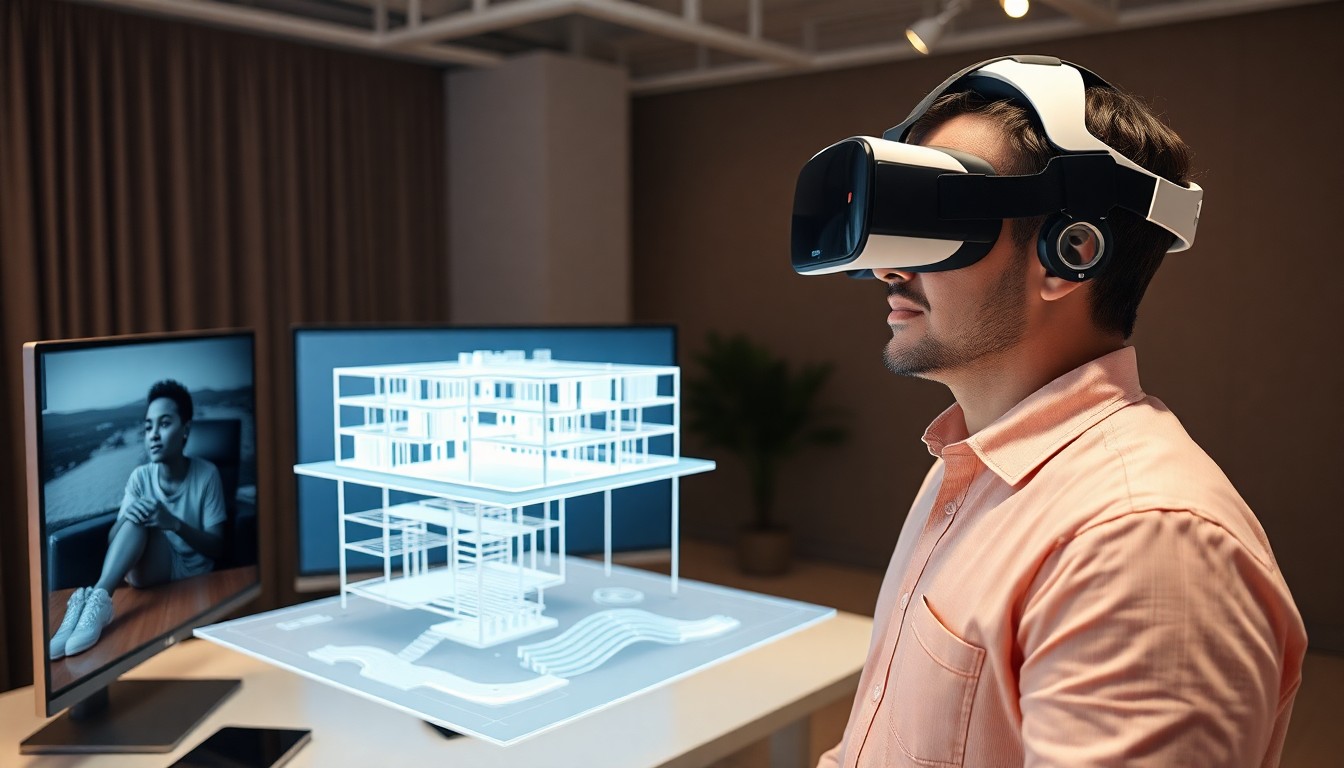
Virtual reality (VR) walkthroughs allow the viewer to navigate the space in real time, using a headset or a screen-based navigation interface. The viewer can look in any direction and move through the modelled spaces. VR delivers the most immersive experience but requires the most production investment.
The key question for any client is not 'what is the best technology?' but 'what decision does this visualisation need to support, and what is the minimum deliverable that supports that decision?'
What each deliverable costs in Kenya
Architectural visualisation fees in Kenya are priced per deliverable rather than as a percentage of project cost. The ranges reflect the wide variation in quality, complexity, and production time.
Exterior still renders: KES 30,000–90,000 per image for a standard-quality photorealistic exterior. Higher complexity (large mixed-use development, multiple contextual elements) pushes towards the top of this range. A 5-image package — exterior elevation, aerial perspective, street-level view, key façade detail, and entrance — is typically priced at KES 120,000–350,000.
Interior still renders: KES 25,000–70,000 per room, depending on complexity of the space and specification of finishes. A key interior space (living area, lobby, suite) benefits from detailed material specification in the model — the render is only as detailed as the design information it receives.
Animation (1–2 minutes): KES 250,000–600,000 for a standard flythrough. Longer animations or productions with complex lighting, landscaping, and post-production finish towards the upper range.
VR walkthrough: KES 300,000–800,000 for an interactive VR package covering the main spaces of a residential or commercial building. The production time is significant — typically 4–6 weeks from a completed 3D model.
The minimum fee for any visualisation deliverable is KES 25,000. Packages combining stills, animation, and VR are discounted relative to individual pricing.
When visualisation adds genuine value
The highest-value use cases for architectural visualisation in Kenya are: pre-sales marketing for residential and mixed-use developments; planning submissions for buildings with complex massing or significant public impact; client design sign-off on key spaces; and investor presentations where the development concept needs to be communicated compellingly.
Pre-sales marketing is the strongest commercial case. A developer selling apartments off plan needs buyers to commit to a purchase before the building exists. High-quality exterior and interior renders, combined with an animation or VR walkthrough, allow the development to be marketed at a level of quality that correlates with achievable pricing. The visualisation cost — KES 350,000–700,000 for a comprehensive package — is small against the value of securing early sales that fund construction.
Planning submissions: county planning departments in Kenya increasingly expect visual material for larger or more prominent developments. A set of elevation renders showing the building in its site context, with accurate scale relationships to neighbouring structures, supports the planning officer's assessment and reduces the risk of a request for amendments after submission.
Client sign-off: for clients who cannot easily read architectural drawings, a render or walkthrough gives them the ability to make informed decisions before construction. Avoiding one significant change order — a relocated staircase, a revised bathroom layout, a different façade treatment — easily pays for a visualisation package multiple times over.
Investor presentations: for developments seeking equity partners or bank finance, visualisation supports the credibility of the proposal. A bank's credit committee reviewing a KES 200M development loan is more confident in a team that can demonstrate the project in detail.
When visualisation does not add value
Not every project benefits from detailed visualisation. The cases where it adds marginal value are: small single-unit residential projects with an experienced client who can read drawings; projects where the design concept is straightforward and universally understood; and projects at early feasibility stage where the design is not yet fixed enough to be visualised accurately.
A render produced from an incomplete or inaccurate model misleads. If the design changes significantly after the render is produced — which happens when visualisation is commissioned too early — the render is not only wasted but potentially counterproductive: the client's expectations are set against an image that does not represent the final building.
The right time to commission detailed visualisation is after scheme design is approved and the major design decisions are fixed. Commissioning before that point risks re-production costs when the design evolves.
The right deliverable for an early-stage client presentation is a concept render or sketch perspective — not a photorealistic CGI. Concept visuals are cheaper, faster, and communicate the design idea without implying a level of fixity that the design has not yet reached.
AI-assisted visualisation: where it fits
AI-assisted image generation has entered the architectural visualisation market rapidly. Tools that generate photorealistic images from architectural drawings or text prompts can produce compelling images at a fraction of the cost of traditional 3D rendering. They are useful for early-stage concept communication and marketing mood boards.
They are not a replacement for production-quality visualisation based on an accurate 3D model. The distinction is accuracy: an AI-generated image creates a plausible version of a building; a model-based render shows the actual building — correct dimensions, accurate material specification, real site context, verified sightlines.
For planning submissions, investor presentations, and pre-sales marketing where accuracy matters, model-based visualisation remains the appropriate tool. For social media content, early-stage client presentations, and concept exploration, AI-assisted visuals can deliver compelling material at low cost.
The REDM platform uses AI-assisted visualisation for early-stage project images in the client portal. For production-quality marketing assets, the full visualisation and VR service is available through the services page at `/services`.
Next step
Turn this insight into a project decision
Use the free check or calculator while the question is still fresh. If the numbers make sense, continue into report delivery, capture and project setup.
Discuss your visualisation scopeFrequently asked questions
What does 3D architectural visualisation cost in Kenya?
Exterior still renders cost KES 30,000–90,000 per image. A 5-image package (exterior, aerial, street level, detail, entrance) is KES 120,000–350,000. Interior stills cost KES 25,000–70,000 per room. Animations (1–2 minutes) cost KES 250,000–600,000. VR walkthroughs cost KES 300,000–800,000. The minimum fee is KES 25,000.
When should I commission 3D renders for a building project?
Commission renders after scheme design is approved — when the major design decisions are fixed. Renders produced from an incomplete or evolving design require re-production when the design changes. For early-stage client presentations, concept visuals or AI-assisted images are cheaper and more appropriate than photorealistic CGIs.
What is the difference between 3D renders and a VR walkthrough?
A 3D render is a static image — a photorealistic photograph of the building as it will appear. A VR walkthrough is interactive — the viewer navigates through the modelled spaces in real time, looking in any direction. Renders are produced faster and at lower cost; VR delivers a more immersive experience but takes 4–6 weeks of production time and costs significantly more.
Do I need 3D renders for planning approval in Kenya?
Renders are not a mandatory planning requirement for most residential and small commercial projects in Kenya. For larger, more prominent, or architecturally complex developments, county planning departments may request or expect visual material showing the building in its site context. Including renders in a planning submission generally supports the approval process and reduces the risk of requests for amendments.
Can AI-generated images replace traditional 3D renders?
AI-generated images are useful for early-stage concept communication, mood boards, and social media content. They cannot replace model-based renders for planning submissions, investor presentations, or pre-sales marketing where accuracy — correct dimensions, real site context, verified material specification — is required. The two tools serve different purposes at different stages.