School building design in Kenya: space and briefing guide
Reader can brief classrooms, circulation, and sports areas for school projects.
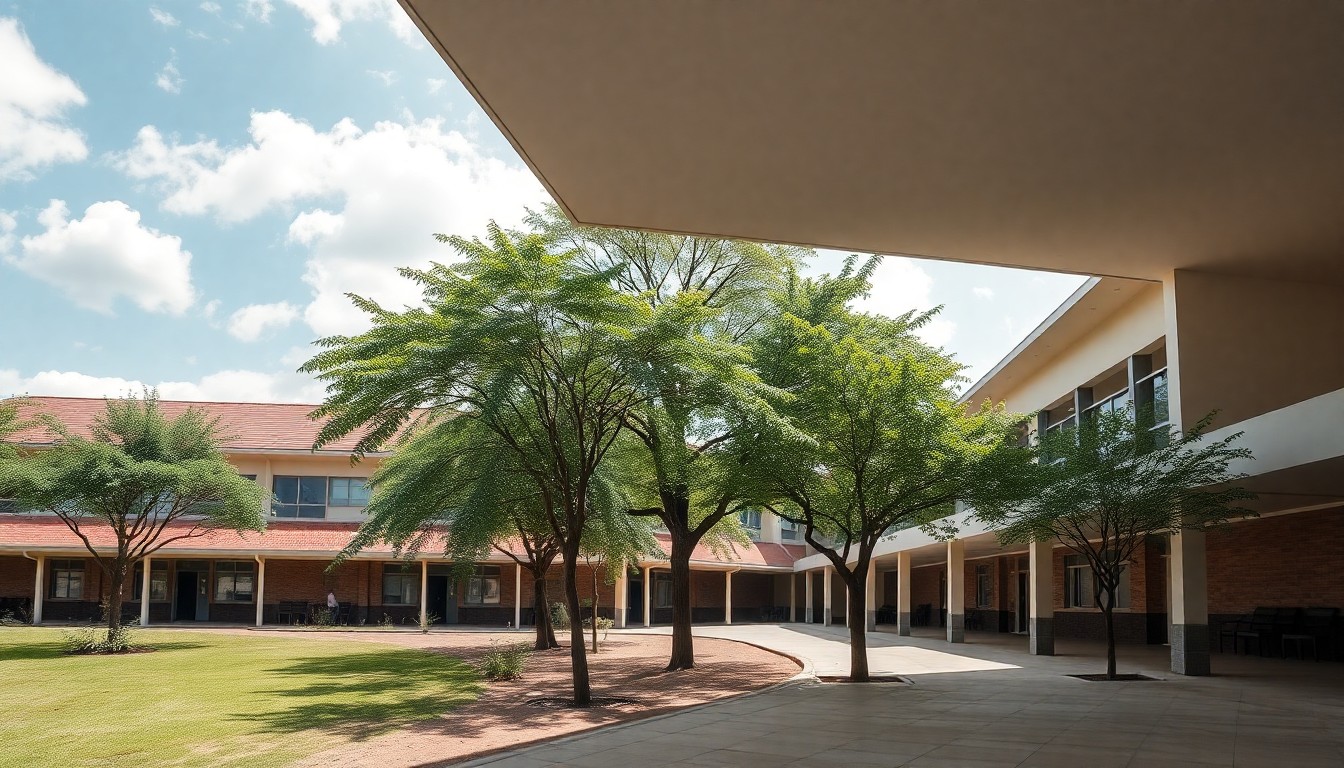
School brief: teaching, assembly, and outdoor space
School projects need classroom counts, specialist rooms (labs, halls), admin, and playable open space on owned land. Neufert school sections cover typical room sizes and relationships.
Kenyan schools under the Competency-Based Curriculum (CBC) need more specialist rooms — science labs, home science, computer rooms, music, and art — than the old 8-4-4 system. Brief the full CBC room schedule with the architect before sketching a single classroom.
Neufert school sections cover typical room sizes and adjacencies developed from European practice. In Kenya, the Competency-Based Curriculum (CBC) has expanded the specialist room schedule beyond old 8-4-4 norms: science laboratories (physics, chemistry, biology), home science rooms, computer laboratories, music rooms, art studios, and library resource centres all need briefing with area targets and equipment schedules.
The brief must separate teaching spaces from administration and from outdoor facilities. A common error is briefing only classroom count and total built area — the developer then discovers the science lab needs gas, water, and fume extraction that the classroom block was never designed to accommodate.
Daylight and ventilation
Classrooms need workable daylight and cross-ventilation where by-laws allow — coastal classrooms overheat without shading strategy.
Classrooms need workable daylight from at least two directions where by-laws permit, and cross-ventilation driven by the prevailing breeze. On the Kenyan coast, the south-east monsoon provides reliable air movement roughly 60% of the year — orient classroom blocks perpendicular to this breeze with shaded openings on both sides. Deep overhangs (1.2–1.5 m) on north and south elevations, and vertical shading or brise-soleil on east and west, can reduce solar gain by 40–60% before mechanical cooling is even considered.
Air-conditioned classrooms are rare in Kenyan schools and carry operational cost that most school budgets cannot sustain. Design for natural comfort as the primary strategy; mechanical ventilation (ceiling fans minimum, roof extract where heat builds) as the fallback.
Sports and assembly
Sports halls and assembly halls have span and height demands — coordinate structure early. Link to sports hall Neufert slice for hall proportions.
Assembly and sports halls on the coast need roof ventilation strategies beyond inland practice — heat build-up under metal deck roofs can make halls unusable by mid-morning. Specify insulated roofing, ridge vents, and ceiling fans as minimum; mechanical ventilation if budget allows.
Sports halls and assembly halls have span and height demands that drive structural cost. A multipurpose hall spanning 15–18 m with clear height of 6–7 m for basketball or badminton needs steel trusses or long-span concrete that classroom blocks do not. Coordinate the structural engineer at concept stage — the hall location on site affects foundations, drainage, and future expansion logic.
On the Kenyan coast, metal-deck roofs on sports halls create heat traps that make halls unusable by mid-morning without ventilation strategy. Specify insulated roofing panels, continuous ridge vents, and high-level extract fans as minimum. If budget allows, a raised monitor roof with louvred sides provides passive stack ventilation that works with coastal breezes.
What to do in the next two weeks
Document decisions on the REDM project file and align the team before the next fee milestone.
Visit a recently opened CBC school with your architect before finalising the brief. The Ministry of Education publishes minimum standards; real schools reveal what those standards feel like at full enrolment. Photograph corridor widths at class change, lab storage after one term of use, and playground drainage after the long rains — these ground the brief in operational reality.
Briefing checklist for Kenyan developers
1. Brief full CBC room schedule: classrooms, science labs, home science, computer lab, music, art, library
2. Verify playground and sports field are on titled land — not adjacent public land the county may reclaim
3. Appoint architect, structural engineer, and MEP engineer at concept; confirm Ministry of Education standards
4. Orient classroom blocks perpendicular to prevailing breeze (south-east monsoon on coast) for cross-ventilation
5. Specify passive shading: deep overhangs on north/south, brise-soleil on east/west, insulated roofing on halls
6. Brief phased expansion in the masterplan — Phase 1 must not block Phase 3 access or services routes
7. Separate vehicle drop-off, pupil pedestrian, and service/delivery entrances in the site brief
8. Check county fire and NCA requirements for assembly occupancy; confirm playground drainage after long rains
Deeper notes for board and lender packs
Verify playground and outdoor space are on titled land — not adjacent public land the county may reclaim. The most common school project failure in Kenya is discovering the playing field sits on unowned or contested land after the classroom block is built.
Phased expansion should be embedded in the masterplan brief, not retrofitted. Structure future classroom wings, labs, and assembly extensions so Phase 1 does not block Phase 3 access or services routes.
On the Kenyan coast, classroom blocks need passive shading — deep overhangs, brise-soleil on east/west elevations, and cross-ventilation designed to the prevailing breeze (south-east monsoon). Air-conditioned classrooms are rare in Kenyan schools; design for natural comfort first.
Pair this guide with the Kenya building by-laws article for classroom dimensions and fire rules, and the masterplanning guide for phasing strategy. The corridor circulation guide applies to school circulation at scale.
Next step
Turn this insight into a project decision
Use the free check or calculator while the question is still fresh. If the numbers make sense, continue into report delivery, capture and project setup.
Run a free project checkFrequently asked questions
Minimum classroom size in Kenya?
Confirm with county and education standards — Neufert gives reference proportions.
Playground on title?
Verify land ownership and planning — common failure point.
Phased school expansion?
Masterplan phases in brief to avoid blocking future blocks.
Security and access?
Separate vehicle, pupil, and service entrances in brief.
Sources?
Neufert schools chapter + Kenya by-laws guide.