Kitchen design for coastal apartments in Kenya
Layout, ventilation, and services zones for humid coastal apartments.
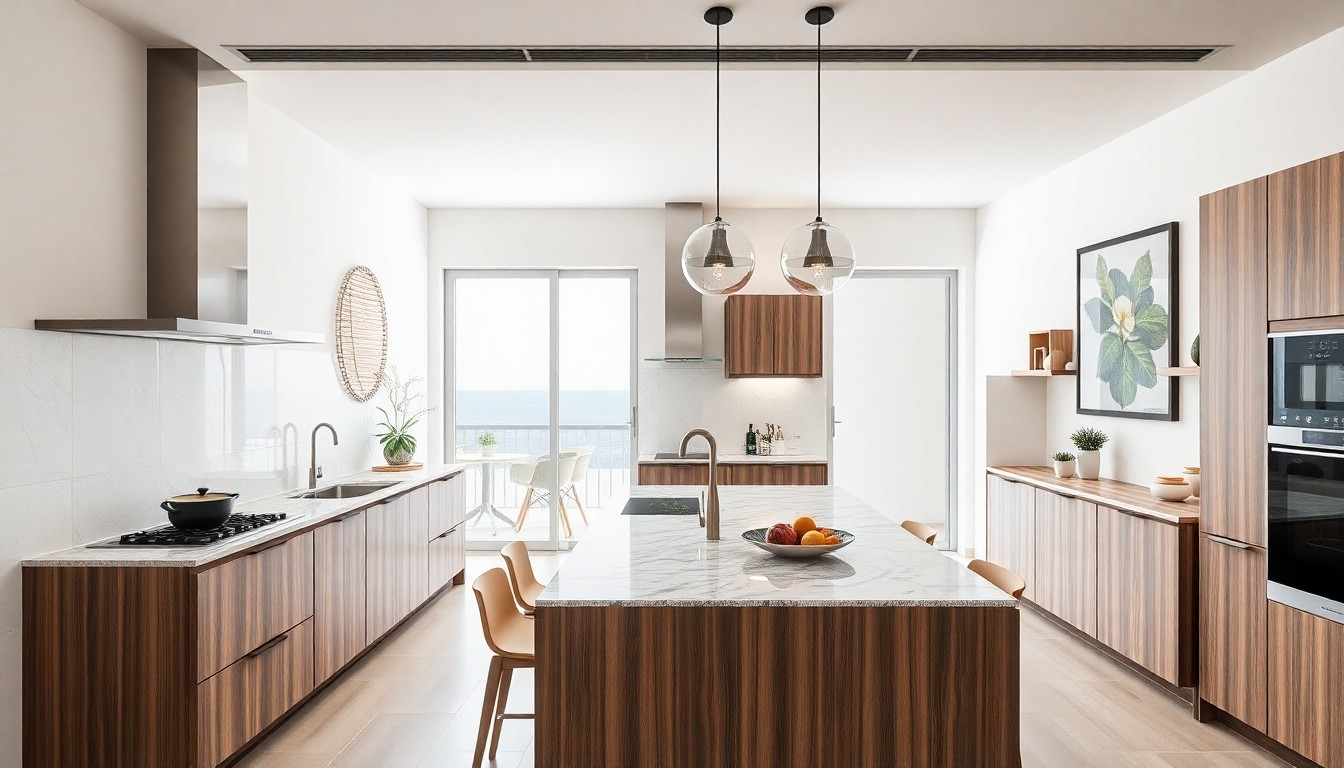
Why kitchen planning drives coastal apartment sales
Kitchens sell rentals and off-plan units — buyers imagine daily cooking, storage, and ventilation. On humid coast projects, kitchens also drive MEP loads (extract fans, grease, plumbing stacks) and façade penetrations.
Planning the kitchen after the living room often leaves a narrow galley with no work triangle, no space for fridge depth, and extract ducts that clash with beams discovered at first fix.
Layout, clearances, and the work triangle
Zone the kitchen into storage, preparation, cooking, and cleaning. Maintain workable clearances between counters — tight plans look fine on marketing renders until two people cook together.
Confirm appliance dimensions early (fridge depth, cooker width, dishwasher if any). Imported units may not match local cabinet modules.
Align the sink, cooker, and fridge in a logical triangle without crossing main circulation from the corridor.
Neufert cites typical built-in kitchen carcasses from 20–120 cm width (5 cm steps) with worktop height about 85 cm — verify against local cabinet suppliers on coast projects. Architect-designed kitchens assemble fixed worktops, storage, and equipment zones; document them before wet trades start.
Ventilation and humidity
Extract rates must match cooking style — open windows alone are unreliable during rains. Duct routes should be coordinated with structure before slabs are cast.
Make-up air paths matter; negative pressure pulls humid corridor air through door undercuts and encourages mould at cabinet backs.
Services risers and structure
Stack kitchens vertically in apartments to save drainage runs. Riser positions should appear on structural and architectural sheets together — not guessed on site.
Penetrate beams only where allowed by engineer instruction; site holes without records become variation claims.
Coordination with interior design
Cabinet layouts, splash zones, and power points belong in the interior package issued before wet trades start. Late interior design forces chasing in tiled walls.
Next steps on your project
Before locking cabinetry orders, walk the kitchen with the MEP engineer — riser shifts after tiles start are expensive on coast sites.
Add kitchen zone dimensions to the REDM design brief so feasibility area assumptions match sellable plans.
Interior scope and fees are covered in the interior design guide; design stage sequencing is in the design-stage guide.
Use plot check and project check on REDM to capture room programme before detailed drawings.
Neufert Architects' Data (searchable PDF) is indexed under design-reference/interiors/ — adapt European dimensions to Kenya by-laws and market; architect-signed room sheets override generic tables.
On Kenyan coastal projects, document every decision that affects cost, approvals, or programme in the REDM project file so consultants, lenders, and your own board see the same timeline. Informal agreements scattered across email are where disputes start.
Before the next fee milestone, confirm who signs, who certifies, and who records — then hold one coordination meeting with minutes. Developers who skip that step usually pay twice: once for rework and once for dispute advice.
Pair this guide with the design-stage and statutory approvals articles so by-law, environmental, and tender assumptions stay consistent from predesign through handover.
On Kenyan coastal projects, document every decision that affects cost, approvals, or programme in the REDM project file so consultants, lenders, and your own board see the same timeline. Informal agreements scattered across email are where disputes start.
Before the next fee milestone, confirm who signs, who certifies, and who records — then hold one coordination meeting with minutes. Developers who skip that step usually pay twice: once for rework and once for dispute advice.
Pair this guide with the design-stage and statutory approvals articles so by-law, environmental, and tender assumptions stay consistent from predesign through handover.
On Kenyan coastal projects, document every decision that affects cost, approvals, or programme in the REDM project file so consultants, lenders, and your own board see the same timeline. Informal agreements scattered across email are where disputes start.
Before the next fee milestone, confirm who signs, who certifies, and who records — then hold one coordination meeting with minutes. Developers who skip that step usually pay twice: once for rework and once for dispute advice.
Pair this guide with the design-stage and statutory approvals articles so by-law, environmental, and tender assumptions stay consistent from predesign through handover.
On Kenyan coastal projects, document every decision that affects cost, approvals, or programme in the REDM project file so consultants, lenders, and your own board see the same timeline. Informal agreements scattered across email are where disputes start.
Before the next fee milestone, confirm who signs, who certifies, and who records — then hold one coordination meeting with minutes. Developers who skip that step usually pay twice: once for rework and once for dispute advice.
Next step
Turn this insight into a project decision
Use the free check or calculator while the question is still fresh. If the numbers make sense, continue into report delivery, capture and project setup.
Run a free project checkFrequently asked questions
How big should a coastal apartment kitchen be?
Depends on unit type and market. Brief your architect with appliance list and cooking habits; confirm net area against by-laws.
Can the kitchen be open to the living room?
Yes, if ventilation and fire requirements for your building type allow. Separate zones may reduce noise and smell migration.
Who coordinates extract ducts?
MEP engineer with architect; structural approves penetrations.
When should cabinets be ordered?
After approved interior drawings and MEP rough-in layout — not before slab penetrations are confirmed.
Does REDM size kitchens?
REDM captures brief and area targets; dimensional design remains with your architect and interior designer.