Istisna construction contracts: building for an agreed price in Kenya
How Istisna commission-to-build contracts work for Kenyan construction — milestones, variations, payment, and what Muslim developers must document alongside standard contract law.
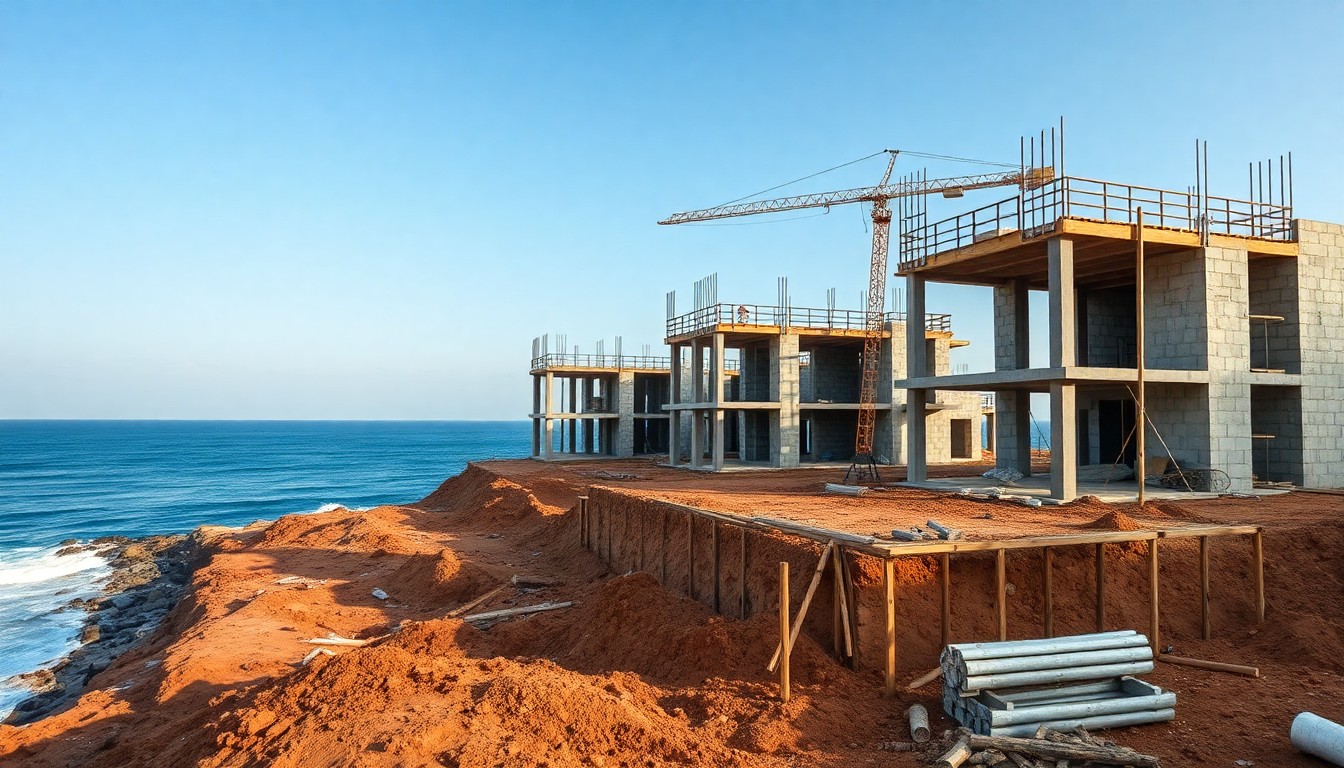
The contractor is on site — Istisna is the contract that governs the build
A Muslim developer on the Kenya coast has approved drawings, a bill of quantities, and a contractor ready to mobilise. The question is not whether to sign a construction contract — it is whether that contract is structured as Istisna (commission to build) or a conventional works agreement that happens to be signed by Muslim parties. The difference matters: Istisna embeds milestone-linked payment, fixed price, and asset description directly into the Shariah frame, while a conventional contract may carry interest on late payment, uncapped variations, and financing cross-defaults that create riba risk.
Architect Darani is not a Shariah board and does not issue fatwa. This guide explains Istisna for main contractor appointments in Kenya: how it parallels standard construction contracts, where it differs, and why Istisna does not replace Kenyan construction law — it sits alongside it.
Istisna in plain English
Istisna is a contract to manufacture or construct: the buyer (mustasni) commissions the maker (sani) to build a described asset for an agreed price, with payment typically at milestones. The asset does not need to exist at the time of the contract — unlike Murabahah, which requires the financier to own the goods before selling. This makes Istisna the natural mode for construction: the contractor is commissioned to build something that does not yet exist.
The key features: the asset must be described with sufficient detail — drawings, specifications, bill of quantities. The price is agreed before work starts. Payment is usually tied to milestones — foundation complete, slab cast, roof on, practical completion — not to time or interest. Variations are permitted if agreed and priced. The contractor is responsible for materials and workmanship unless the contract states otherwise.
What Istisna does not do: replace the need for a QS, a proper BoQ, a programme, variations procedure, retention, defects liability, or Kenyan contract law. These are professional and legal requirements that sit alongside the Istisna structure. Istisna frames the economic relationship — it does not write the technical specification. A developer who says 'we use Istisna so we do not need a JBC contract' is misunderstanding both Istisna and construction management.
Istisna and standard construction contracts: parallel, not replacement
A standard JBC (Joint Building Council) contract in Kenya already contains much of what Istisna requires: description of works, contract sum, milestone payments, variations procedure, defects liability period, and retention. The Shariah overlay adds: no interest on late payment (charity penalty instead), no cross-default to interest-bearing loans, and explicit acknowledgement that the contract is a commission to build (Istisna) rather than a sale of existing goods (Murabahah).
Kenyan developers using Islamic finance can use a JBC or FIDIC contract with an Istisna addendum that overrides the interest, financing, and dispute clauses. A cleaner approach is a purpose-drafted Istisna construction agreement that incorporates the technical schedules (drawings, BoQ, programme) from the standard form by reference. Either way, the contract must be reviewable by both a construction lawyer and a Shariah scholar in one pass.
The contractor's perspective matters too. A Muslim contractor may prefer Istisna for the same reasons as the developer — avoidance of riba in payment terms. But a contractor who is not Muslim, or who works across both Islamic and conventional projects, may simply want clear payment terms. Istisna is binding on Muslim parties; it does not compel non-Muslim contractors to adopt Islamic beliefs. The contract structure should focus on clear, enforceable terms that both sides accept.
Kenya coastal example: apartment construction in Shanzu
Yusuf is developing sixteen two-bedroom apartments in Shanzu. The project is funded through a Musharakah with two cash partners (KSh 45M combined) and a Murabahah materials facility (KSh 20M). He appoints a main contractor under an Istisna agreement with the following terms.
Contract sum: KSh 58 million fixed price, subject to agreed variations only. Works description: architectural drawings ref ARC-2026-001, structural drawings ref STR-2026-001, BoQ ref BQ-2026-001, finishes schedule ref FIN-2026-001. Programme: 16 months to practical completion, 30 September 2027. Milestone payments: 10 percent on mobilisation, 20 percent on foundation and ground slab, 25 percent on roof structure, 25 percent on internal finishes, 15 percent on practical completion, 5 percent retention released after defects liability. Late payment by the developer: fixed charity penalty per week, not interest. Variations: priced and agreed in writing before work proceeds.
The Istisna contract sits alongside the Musharakah JV and the Murabahah materials facility. The contractor is paid from the project account. Milestone certificates are issued by the architect or QS. The REDM project file tracks each milestone against programme and payment, giving all partners one view of construction progress. This structure works because it separates the build contract (Istisna) from the partnership (Musharakah) and the materials finance (Murabahah) — each does one job.
Halal audit box: Istisna vs conventional construction contract
Five checks for an Istisna construction contract. One: the works are described by reference to drawings, BoQ, and specifications — the asset is defined before the price is fixed. Two: payment is tied to milestones or progress, not to time or an interest-bearing schedule. Three: late payment penalties go to charity, not the contractor's profit. Four: variations are priced and agreed before execution — open-ended cost-plus without a cap creates gharar (uncertainty). Five: the contract does not cross-default to an interest-bearing loan — if the developer's bank loan defaults, the contractor's rights under Istisna should not be affected by a loan agreement the contractor is not party to.
A conventional JBC contract with an interest clause for late payment is the most common riba trap. Replace 'interest at 2 percent above KBRR per month on overdue amounts' with 'a fixed penalty of KSh X per week of delay, payable to [named charity], not to the contractor.' The contractor still has an incentive to enforce payment — the developer faces a penalty — but the penalty does not enrich the contractor and does not compound.
Retention under Istisna is permissible: the developer withholds a percentage (typically 5 percent) of each milestone payment and releases it after the defects liability period. This is a commercial safeguard, not riba — the retained amount belongs to the contractor and is held in trust by the developer. The contract should state the retention percentage, the defects period, and the release mechanism.
REDM tools for the construction stage
REDM supports the construction stage with milestone tracking, payment certification, and project file continuity from feasibility through handover. The project file links the original feasibility assumptions (cost, programme, returns) to construction reality — so partners can see whether the project is tracking to the numbers they approved. For Yusuf's Shanzu project, the REDM file shows: Milestone 1 (mobilisation) paid, Milestone 2 (foundation) certified, programme on track, costs within 3 percent of budget.
The milestone tracker connects directly to the Istisna payment schedule. The QS or architect certifies completion of each milestone. The developer approves payment. The REDM project file records the certification, the payment, and the remaining contract sum — giving all Musharakah partners one link to check construction health. We coordinate with QS and project management professionals; we do not certify construction contracts or issue payment certificates.
Checklist — before the contractor mobilises
Six steps before the Istisna contract is signed and the contractor moves to site. One: complete drawings, structural design, BoQ, and finishes schedule — do not commission construction from concept sketches. Two: agree a fixed contract sum with a clear variations procedure and approval threshold. Three: define milestones — five or six clear deliverables, not 'monthly progress payments' which may be challenged as too open-ended. Four: draft the late payment clause as a charity penalty, not interest. Five: agree retention percentage, defects period, and release conditions. Six: have the contract reviewed by both a construction lawyer (for compliance with Kenyan law) and a Shariah scholar (for Istisna validity).
If the contractor is also supplying materials, clarify whether materials are covered by Istisna (contractor supplies as part of the works) or by a separate Murabahah facility (developer buys materials from a bank and supplies to contractor). Double-counting materials in both the Istisna contract sum and the Murabahah facility creates cost confusion and potential dispute. The BoQ should assign each line item unambiguously to one contract.
Read the hub article for the full lifecycle map. The Murabahah article covers materials procurement. The construction stage guide covers the full build process. When ready: run a free project check on your next site, and model construction costs against your Istisna contract sum before signing.
Next step
Turn this insight into a project decision
Use the free check or calculator while the question is still fresh. If the numbers make sense, continue into report delivery, capture and project setup.
Run a free project checkFrequently asked questions
What is the difference between Istisna and Salam?
Istisna is a commission to build — the buyer orders described works at an agreed price with milestone payments. Salam is a forward sale — the buyer pays the full price upfront for goods to be delivered later. In construction, Istisna fits the contractor appointment; Salam fits off-plan unit sales to end buyers. They serve different parties at different stages.
Can I use a standard JBC contract as an Istisna agreement?
A JBC contract can form the technical base, but you need an Istisna addendum that replaces interest on late payment with a charity penalty, removes cross-default to interest-bearing loans, and explicitly frames the contract as a commission to build. A purpose-drafted Istisna agreement incorporating the JBC schedules by reference is cleaner. Have both a construction lawyer and a scholar review the final document.
Does Istisna allow variations during construction?
Yes — Istisna permits variations if they are agreed, priced, and documented before the work proceeds. Open-ended cost-plus without a cap creates gharar (excessive uncertainty). A clear variations procedure with approval thresholds and pricing rules protects both the developer and the contractor.
What happens if the contractor abandons the project mid-way?
Remedies for contractor default are defined by the contract and Kenyan construction law, not by Istisna itself. The contract should specify termination conditions, payment for work completed, handover of materials and site, and the process for appointing a replacement contractor. Istisna provides the Shariah frame; Kenyan law provides the enforcement mechanism.
Can REDM track milestone payments for my Istisna contract?
Yes. REDM project files track milestone certification, payment approval, contract sum remaining, and programme progress — all linked to the original feasibility numbers. The platform does not issue payment certificates (your QS or architect does that), but it gives all partners one link to monitor construction health. Start with a free project check at /feasibility/wizard.