The AI price crash is making automated construction cost estimation cheaper than ever — here is what that means for Kenyan developers
The cost of running frontier AI models has collapsed in 2026. DeepSeek V4 Flash delivers intelligence comparable to models that cost 10 to 50 times more. For construction cost estimation — a process that requires benchmarking thousands of line items against current market rates — the economics have shifted. What was economically unviable two years ago now costs cents per estimate. This article maps what the AI price collapse means for developers commissioning cost plans, bills of quantities, and feasibility studies in Kenya.
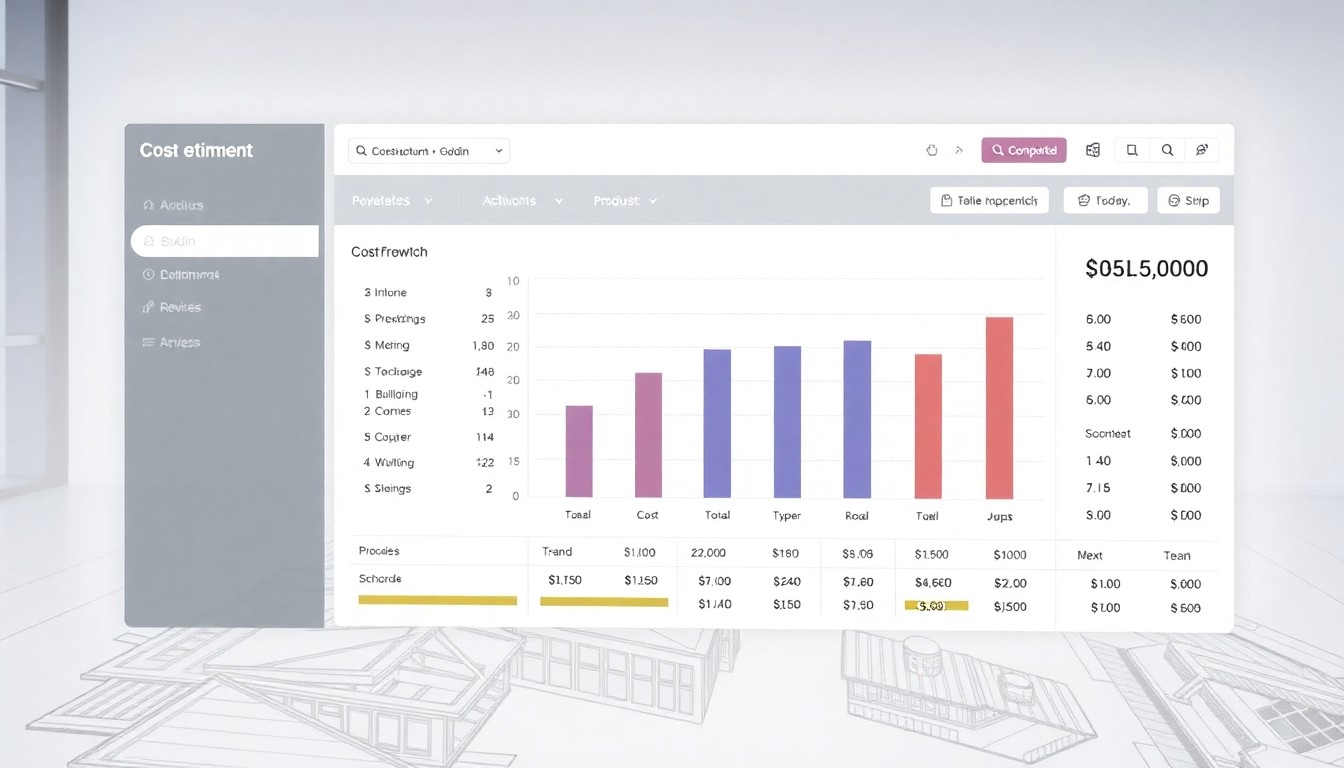
What happened to AI costs in 2026 — the numbers that matter
In the last week of July 2026, three price signals landed. DeepSeek released V4 Flash — a frontier model scoring 50 on the Artificial Analysis Intelligence Index — at pricing that undercuts equivalent Western models by a factor of 10 to 50. OpenAI described GPT-5.6 as delivering 'frontier intelligence fused with frontier efficiency'. A Reddit comparison on July 31 showed the same AI workload costing $0.018 on one provider and over $2 on another — a 100x spread for equivalent output.
This is not a marginal price cut. It is a structural shift in what it costs to run intelligence at scale. For industries where AI adoption was blocked by per-unit economics — legal document review, medical image analysis, construction cost estimation — the barrier has collapsed.
Construction cost estimation is a case study in why this matters. A bill of quantities for a medium-sized residential development in Kenya contains thousands of line items — concrete, reinforcement, blockwork, finishes, MEP installations, preliminaries — each requiring a current market rate, each needing cross-reference against project specifications and location factors. Running an AI model to benchmark those items against a cost database, flag anomalies, and generate a structured estimate used to require processing that was expensive enough to reserve for large projects. At the new pricing, that processing costs cents.
What AI-assisted cost estimation actually produces — and what it does not
It is important to be precise about what an AI cost estimation system does and where its output fits in the development process.
An AI-assisted preliminary cost estimate starts from project parameters — gross floor area, number of storeys, building type, specification level, location — and produces a cost breakdown by building element. It benchmarks each element against documented rates from comparable projects, adjusted for the specific location and specification. It produces a structured estimate with assumptions documented for each line: which benchmark was used, what adjustment factors were applied, and what the confidence range is.
This is not a substitute for a detailed bill of quantities prepared from completed construction drawings by a registered quantity surveyor. A preliminary estimate is for decision-making at the feasibility stage: Is the project viable at KES 150 million? What is the rough split between structure, envelope, fit-out, and MEP? How does the cost change if the specification is upgraded from mid-range to high-end?
But the preliminary estimate is often the most important cost document a developer commissions — because it determines whether the project proceeds at all. Getting it wrong means either abandoning a viable project or committing to one that cannot be built within the budget. Getting it right, quickly, means making informed land purchase and design decisions from day one.
Why the AI price crash changes the economics for Kenyan developers
Before the 2026 AI price crash, running an automated cost benchmarking process across a full project — thousands of items, multiple specification scenarios, sensitivity analysis on key cost drivers — required computational cost that was not trivial. For a single feasibility study on a large project, it was justifiable. For every project in a developer's pipeline, across multiple scenarios and iterations, it was not.
At current AI pricing, the calculation changes. A preliminary cost estimate for a new project — drawn from the same documented rate database, with the same benchmark quality, and the same structured output — costs cents in AI processing. The economics support running the estimate not once, but multiple times: at the initial site evaluation, after the first design sketch, after the specification is refined, and before the tender documents go out.
This is what the AI industry calls 'inference-time economics'. When the cost of running intelligence drops below the cost of the time it saves, the technology shifts from experimental to operational. For construction cost estimation in Kenya — where a QS's time on preliminary estimates is real money, and where delayed feasibility decisions carry real opportunity cost — the threshold has been crossed.
The parallel is instructive. When cloud computing became cheap enough, every company moved from on-premise servers to the cloud — not because the cloud was 'better' in principle, but because the per-unit economics made on-premise irrational. The same shift is now happening with AI and professional services. The question is not whether AI-assisted cost estimation is 'good enough' — it is whether paying for fully manual estimation at every stage of a project is still defensible when AI-assisted estimates cost cents and deliver documented, benchmarked, traceable outputs.
The REDM approach: cost benchmarking from documented Kenyan data
REDM's cost estimation process starts with documented benchmarks — not a language model's recollection of what construction should cost. The system draws from cost tables segmented by building type, specification level, and location for the Kenyan coastal market. Rates are sourced from real project data and reviewed for currency.
When a developer initiates a feasibility check, the system produces a preliminary cost estimate that includes: elemental cost breakdown by building component, benchmark rates with documented sources, adjustment factors for location and specification, sensitivity ranges on key cost drivers, and an explicit confidence assessment on each line.
The estimate is designed to be the starting point for a conversation with a registered QS — not the end of it. The QS reviews the assumptions, adjusts for market conditions that the benchmarks cannot capture, and signs off the final cost plan. The developer gets a cost baseline before the QS is appointed, and the QS gets a documented starting point rather than a blank page.
This is the correct role for AI in cost estimation: accelerating the production of a structured, documented estimate so that professional time is focused on review, judgment, and market intelligence — the parts of the process that cannot be automated.
What this means for your next project
If you are evaluating a development opportunity in Kenya, the cost question is usually the first question. Can this be built within the budget? What is the construction cost per square metre for this building type in this location? How does the specification level affect the number?
A year ago, answering that question required a QS to prepare a preliminary estimate — a process that took days and cost a fee. Today, a documented preliminary estimate can be generated in minutes from benchmark data that the QS can then review and adjust. The QS's time is concentrated on the parts of the estimate that require professional judgment, not on the arithmetic.
The REDM project check provides this preliminary cost estimate as part of the feasibility tool, at no charge. The output includes the elemental cost breakdown, the benchmark sources, and the assumptions. It is intended to give the developer a cost baseline for the design conversation before any consultant is formally appointed.
Next step
Turn this insight into a project decision
Use the free check or calculator while the question is still fresh. If the numbers make sense, continue into report delivery, capture and project setup.
Get a preliminary cost checkFrequently asked questions
How accurate is an AI-generated preliminary cost estimate compared to a QS estimate?
An AI-assisted preliminary estimate based on documented benchmarks is typically accurate to within 15-20% at the feasibility stage — appropriate for go/no-go decisions. It is not a substitute for a detailed bill of quantities prepared from completed drawings. The QS reviews and signs off the final cost plan.
What construction cost data does REDM use for Kenya?
REDM uses documented cost benchmarks for the Kenyan coastal market, segmented by building type, specification level, and location. Rates are derived from real project data and updated regularly. Every estimate includes source documentation so assumptions can be reviewed.
Does the AI price crash mean construction cost estimation will be fully automated?
No. The AI price crash means the computational cost of benchmarking, cross-checking, and estimate generation has become negligible. But the QS's judgment on market conditions, subcontractor capability, contract risk, and specification interpretation remains essential. The price crash enables hybrid working — AI handles the data, the QS handles the judgment.
How do I get a preliminary cost estimate for my project?
REDM's project check produces a preliminary cost estimate from your project parameters — location, building type, floor area, specification level. The output includes the elemental breakdown, benchmark sources, and assumptions. It is provided as part of the feasibility tool at no cost.