Salam and off-plan property sales: prepayment before delivery in Kenya
How the Salam forward-sale contract applies to off-plan property sales in Kenya — specification, delivery date, prepayment, and what Muslim developers and buyers must document.
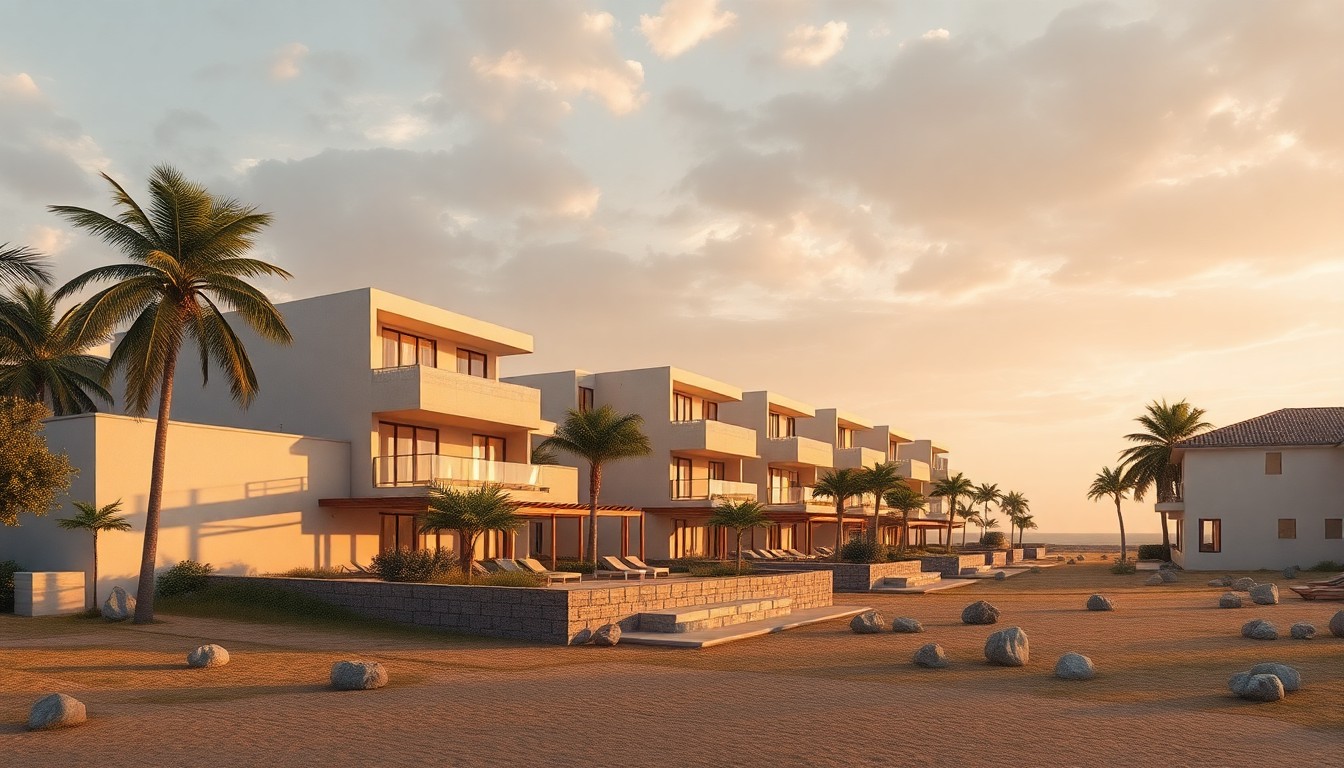
Off-plan deposits and the Muslim buyer's concern
A developer in Mombasa advertises apartments for sale before construction starts. Muslim buyers want to reserve units but worry: is the deposit halal? Is the developer selling something that does not yet exist? Is the payment structure creating riba? These questions lead directly to Salam — the Islamic forward-sale contract that allows prepayment for goods to be delivered on a specified future date.
Architect Darani is not a Shariah board and does not issue fatwa. This guide explains the Salam contract in the context of off-plan property sales in Kenya: what conditions make a pre-sale valid, what documentation is required, and why you cannot simply label any off-plan agreement 'Salam' and assume compliance.
Salam in plain English
Salam is a forward sale where the buyer pays the full price upfront and the seller delivers specified goods on an agreed future date. The rationale in classical Islamic law was to finance farmers — a buyer pays for a harvest in advance, the farmer uses the capital to plant, and the crop is delivered at harvest. In modern property, the parallel is off-plan sales: the buyer pays now for a unit delivered when construction completes.
The conditions for a valid Salam are stricter than many developers assume. The goods must be precisely described — not 'a two-bedroom apartment' but a specific unit with defined area, finishes, fixtures, and floor level. The delivery date must be fixed — not 'approximately December 2027' but a calendar date. The price must be paid in full at the contract signing — not in instalments during construction. And the goods must be of a type that can be described and guaranteed to exist at delivery — which applies to apartments in a development with approved drawings and a construction programme.
This is where most Kenyan off-plan sales fall short of Salam. A buyer who pays a 20 percent deposit with the balance due on completion has not paid the full price upfront — that is not Salam. A developer who cannot fix a delivery date because approvals are pending has not met the date requirement. Calling an off-plan sale 'Salam-compliant' without meeting all conditions is a misrepresentation that creates risk for both sides.
Salam in the development lifecycle
Salam sits in the predesign or early construction stage — after drawings are approved and the construction programme is set, but before the building is complete. The developer uses the Salam capital to fund construction (alongside equity and other facilities), and the buyer secures a unit at a known price with a defined delivery date.
In a typical coastal Kenya project, Salam may fund part of the construction equity. A developer with approved drawings for twelve apartments might sell four units under Salam contracts — full payment upfront, detailed specification, fixed delivery date. The remaining eight units are funded through Musharakah equity and Murabahah materials finance, then sold on completion at market price. The Salam buyers get a discount for early payment; the developer gets construction capital without bank debt.
Salam does not replace the need for a construction contract (Istisna) with the main contractor, nor does it replace the partnership agreement (Musharakah) among equity partners. It is a sales contract — one funding source among several in the capital stack. Confusing Salam with the build contract or the partnership creates the same labelling problem that plagues Murabahah.
Kenya coastal example: off-plan apartments in Nyali
Fatima, a developer, has approved drawings for eight three-bedroom apartments in Nyali. Construction programme: 18 months, practical completion 30 June 2028. Total development cost: KSh 60 million. She pre-sells four units under Salam contracts.
Each Salam contract specifies: Unit B2, third floor, 135 sqm net internal area, three bedrooms, two bathrooms, porcelain floor tiles (specified brand and colour), granite kitchen tops, aluminium windows, one parking bay. Delivery date: 30 June 2028. Price: KSh 8.2 million per unit, paid in full at contract signing — a 12 percent discount from the expected KSh 9.3 million market price on completion. The buyer's funds are held in a project account and drawn against certified construction milestones to protect against developer default.
The remaining four units are funded by Fatima's equity (KSh 20M) and a Murabahah materials facility (KSh 15M). The Salam contracts bring in KSh 32.8 million, reducing the need for external finance. Each Salam buyer receives quarterly construction updates through the REDM project file, including milestone progress against the delivery date. This is not a deposit scheme — it is a documented forward sale with fixed specification, price, and date.
Halal audit box: Salam vs conventional off-plan sale
Five checks for a valid Salam in property. One: the unit is described with sufficient precision that a dispute about what was promised can be resolved objectively — floor plan, finish schedule, fittings specification. Two: the delivery date is a calendar date, not a range or an estimate. Three: the full price is paid at contract signing — not a deposit with balance later. Four: the seller owns or controls the land and has approved drawings — Salam does not permit selling something the seller cannot guarantee to deliver. Five: the buyer's funds are protected — project account, milestone-linked drawdown, or third-party escrow — to mitigate the risk of developer default.
A conventional off-plan sale in Kenya typically involves a deposit (10–30 percent) with the balance on completion, a flexible delivery date subject to variations, and no specific finish schedule at contract stage. These differences are not cosmetic — they determine whether the sale is Salam or a conventional pre-sale with Islamic labelling. A developer who markets 'Shariah-compliant off-plan' without meeting all five Salam conditions is exposing buyers to a transaction that may not be what was represented.
Importantly, Salam does not mean the buyer bears construction risk. If the developer fails to deliver by the fixed date, the buyer is entitled to a full refund of the prepaid price — or may agree to an extension with compensation. The Salam contract should specify the remedy for non-delivery. A developer who cannot absorb the risk of refunding four units' worth of prepayment should not be selling under Salam.
REDM tools for off-plan sales
REDM helps developers structure off-plan sales before marketing begins. A free project check confirms zoning and indicative costs. The feasibility step models the full capital stack — Salam pre-sales, equity, and other facilities — so you know how many units you need to pre-sell to reach financial close. The project file tracks specification, programme, and milestone completion, giving Salam buyers one link to monitor progress against their delivery date.
For Fatima's Nyali project, the REDM file shows: four Salam units at KSh 8.2M each (KSh 32.8M total), equity contribution KSh 20M, Murabahah facility KSh 15M. The milestone tracker shows construction progress against the 30 June 2028 delivery commitment. Quarterly updates go to all four Salam buyers automatically — reducing the email burden on the developer and giving buyers confidence that their prepayment is tied to visible progress. We coordinate with Islamic finance providers; we do not certify Salam contracts.
Checklist — before you offer Salam sales
Seven steps before marketing Salam units. One: approved drawings and a fixed construction programme — do not sell forward from concept sketches. Two: a unit specification schedule with finishes, fixtures, and area measurements. Three: a fixed delivery date with a remedy clause for non-delivery (refund or agreed extension). Four: full price payment at contract signing — structure bank facility for buyers if needed, but the Salam contract requires full payment by the buyer at signing. Five: a project account structure that protects buyer funds — escrow, milestone drawdown, or bank guarantee. Six: quarterly reporting commitment — buyers who paid in full deserve visibility on progress. Seven: scholar review of the Salam contract template before the first unit is sold.
If full upfront payment is not feasible for your buyers, Salam is not the right mode — consider a Musharakah structure where buyers become equity partners, or a conventional off-plan sale with disclosure that it is not structured as Salam. Marketing a partial-deposit off-plan as 'Salam' is worse than not using the label at all — it creates false confidence among Muslim buyers who assume the structure has been reviewed.
Read the hub article for the full lifecycle map of Islamic finance modes. The Musharakah article covers partnership structures that may suit buyers who cannot pay in full. The Istisna article covers the construction contract that delivers what Salam promises. When ready: run a free project check and model your pre-sale strategy before printing the brochure.
Next step
Turn this insight into a project decision
Use the free check or calculator while the question is still fresh. If the numbers make sense, continue into report delivery, capture and project setup.
Run a free project checkFrequently asked questions
What is the difference between Salam and a conventional off-plan deposit?
In Salam, the buyer pays the full price at contract signing for a precisely described unit with a fixed delivery date. A conventional off-plan deposit is typically 10-30 percent with the balance on completion, often with a flexible delivery date and limited finish specification. If your buyers cannot pay in full upfront, Salam is not the right structure — be honest about what you are offering.
What happens if the developer does not deliver by the Salam delivery date?
The Salam contract must specify the remedy. Typically, the buyer is entitled to a full refund of the prepaid price, or both parties may agree to an extension with compensation. The developer bears the delivery risk. A developer who cannot absorb the financial consequence of non-delivery should not be offering Salam contracts.
Can I sell off-plan units with a deposit instead of full payment under Salam?
No. Full payment at contract signing is a condition of valid Salam. If your sales model requires staged payments, consider a Musharakah structure where buyers become partners, or sell conventionally with disclosure that the structure is not Salam. Using the Salam label on a deposit-based sale misrepresents the transaction to Muslim buyers.
Is Salam the same as Istisna?
No. Salam is a forward sale — the buyer pays for goods to be delivered later. Istisna is a commission to build — the buyer orders described works for an agreed price with milestone payments. In Salam, the buyer is a purchaser of a future asset and pays upfront. In Istisna, the buyer is a client commissioning construction and typically pays at milestones.
Can REDM help me structure Salam off-plan sales?
Yes. REDM feasibility tools model the full capital stack including Salam pre-sales, equity, and other facilities. The project file tracks specification, programme, and milestones, giving Salam buyers one link to monitor progress. REDM does not certify Salam contracts — scholar review is required — but it gives you the project visibility buyers expect when they pay in full upfront. Start with a free project check at /feasibility/wizard.