Green building considerations on the Kenyan coast
On the Kenyan coast, credible green building starts with orientation, ventilation, and durable materials — not a marketing slide.
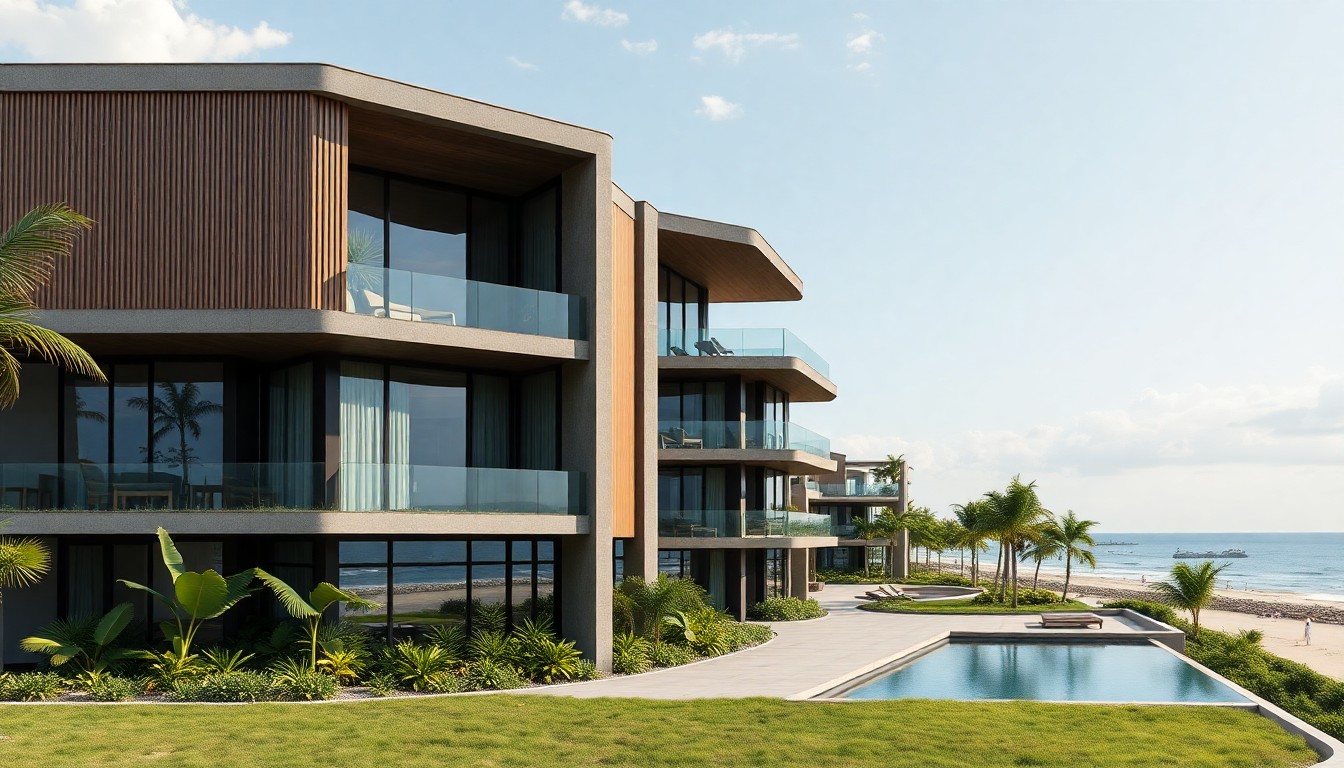
Green building on the coast is mostly passive
Green labels without performance data disappoint buyers within one rainy season. On the Kenyan coast, credible sustainability starts with orientation, shading, cross-ventilation, durable materials, water management, and waste reduction — before bolt-on renewables.
Environmental training for the sector frames sustainability as meeting present needs without compromising future generations — practical for developers when tied to measurable design moves, not brochure graphics.
Design moves that actually perform
Reduce solar gain with orientation and overhangs; size openings for ventilation rather than maximum glass; specify corrosion-resistant fixings; plan greywater and rainwater where county utilities allow; minimise construction waste through modular procurement and site waste plans.
ESIA-friendly projects document these choices early for NEMA and county reviewers.
Materials and MEP without greenwash
Prefer materials with known durability in humid, saline air. Right-size fans and AC — oversized plant fails quietly until bills arrive. Coordinate MEP with architectural passive strategy so equipment is not fighting the envelope.
Economics and marketing
Energy and maintenance savings should appear in feasibility assumptions, not only marketing copy. Buyers on the coast increasingly ask about ventilation and mould risk — address it in design, not after handover.
REDM and climate tools
Use the climate brief tool alongside design-stage guides. Store environmental design decisions in the project file so operations and asset teams inherit intent after handover.
Handover and operating performance
Green outcomes survive handover only if operators receive simple guides: ventilation settings, filter changes, rainwater system operation, and waste separation. Train facility staff before occupation — buyers notice mould and noise in the first rainy season.
Measure what you market: meter sub-circuits, water use per unit, and common-area loads. Without meters, you cannot prove performance or fix overruns.
Link design choices to the acquisition and feasibility stages so investors see environmental risk as programme and cost, not branding alone.
What to do in the next two weeks
Write five measurable targets in the design brief: ventilation strategy, shading, water reuse, waste diversion, and maintenance access. Review them at scheme sign-off.
Require MEP to size plant against brief targets, not generic lux levels. Over-glazed facades need stronger shading or higher running costs — show both in feasibility.
At handover, deliver operator guidance and meter strategy; buyers equate green claims with comfort in the first season.
Challenge marketing decks that add green roofs without improving unit ventilation — buyers live inside units, not on roofs.
Select materials with documented coastal performance; lab labels from temperate climates mislead.
Integrate waste and water plans with county utility realities — tank sizes and pumping need maintenance budgets, not just capex.
Deeper notes for board and lender packs
Cross-ventilation paths need insect screens and security grilles that still allow airflow — detail them on drawings, not site improvisation.
Roof insulation and ceiling cavities in humid climates need vapour logic; specify materials compatible with coastal condensation cycles.
Landscape irrigation should prefer drought-tolerant planting with measured water budgets — not cosmetic turf that dies in the first dry season.
Commissioning MEP systems before occupation proves fans, drains, and tanks work — include commissioning in contract preliminaries.
Shading devices should be maintainable — fixed brise-soleil coated with salt film lose performance if never cleaned.
Common-area lighting timers and sensors should be tuned post-occupation; over-lit corridors waste energy and attract insects.
Report actual meter readings in asset handover packs so facilities management inherits baselines, not guesses.
On Kenyan coastal projects, document every decision that affects cost, approvals, or programme in the REDM project file so consultants, lenders, and your own board see the same timeline. Informal agreements scattered across email are where disputes start.
Before the next fee milestone, confirm who signs, who certifies, and who records — then hold one coordination meeting with minutes. Developers who skip that step usually pay twice: once for rework and once for dispute advice.
Pair this guide with the design-stage and statutory approvals articles so by-law, environmental, and tender assumptions stay consistent from predesign through handover.
On Kenyan coastal projects, document every decision that affects cost, approvals, or programme in the REDM project file so consultants, lenders, and your own board see the same timeline. Informal agreements scattered across email are where disputes start.
Before the next fee milestone, confirm who signs, who certifies, and who records — then hold one coordination meeting with minutes. Developers who skip that step usually pay twice: once for rework and once for dispute advice.
Pair this guide with the design-stage and statutory approvals articles so by-law, environmental, and tender assumptions stay consistent from predesign through handover.
Next step
Turn this insight into a project decision
Use the free check or calculator while the question is still fresh. If the numbers make sense, continue into report delivery, capture and project setup.
Run a free project checkFrequently asked questions
Does green building mean solar panels only?
No. Passive design, materials, water, and waste strategy usually deliver more reliable coastal performance than panels alone.
Do small residential projects need EIA for green claims?
Environmental review depends on triggers, not marketing labels. Separate NEMA requirements from voluntary green features.
What fails first on coastal green projects?
Poor ventilation detailing, wrong materials, and unpriced maintenance.
Should renewables be in feasibility?
Yes — size against load assumptions and grid backup reality; do not treat renewables as decoration.
Where to start on a new plot?
Climate brief, parcel check, then brief the architect with environmental performance targets in writing.