Buying development land in Kenya: the due diligence checks that protect your investment
Land transactions in Kenya carry risks that are invisible to buyers who do not know what to look for. Bad title, restrictive zoning, coastal setbacks, encumbrances, and inaccessible plots have cost developers millions. This guide explains exactly what to check before committing to a purchase.
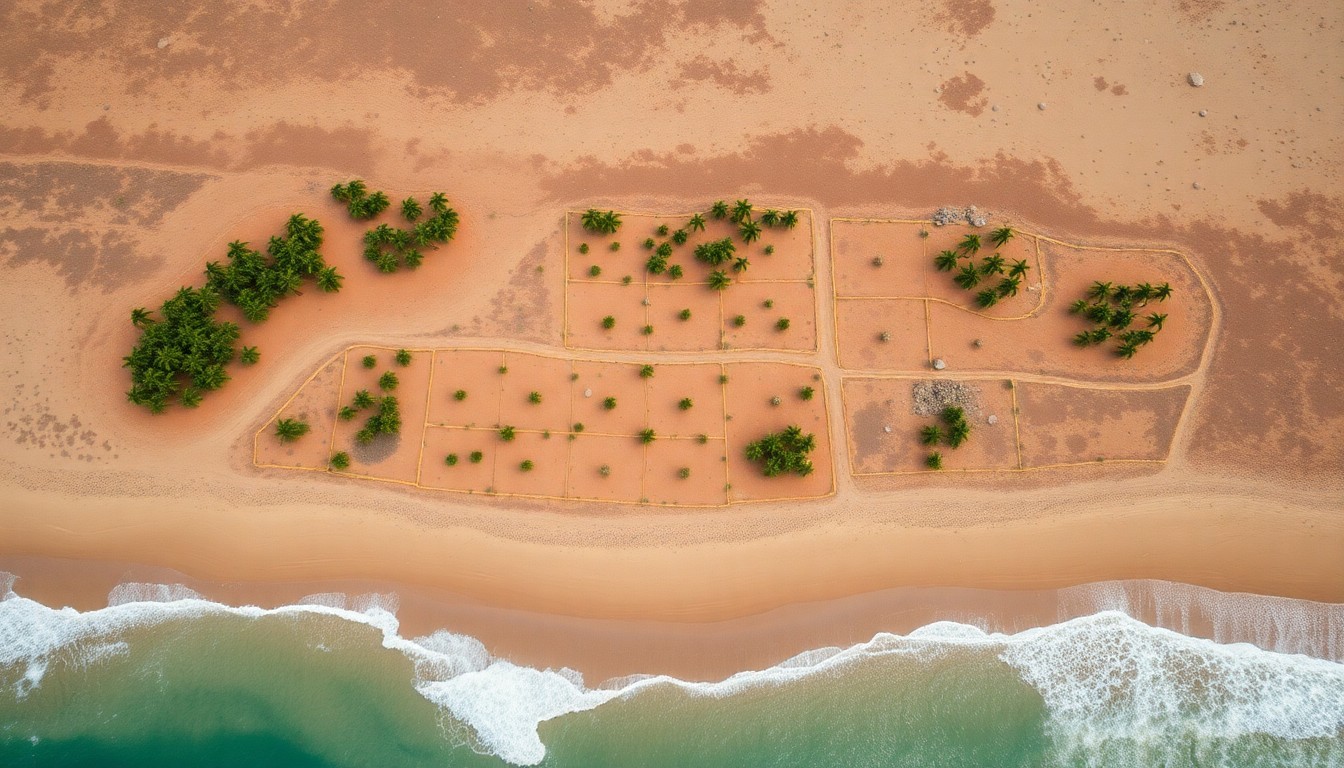
Why so many land purchases in Kenya go wrong
Kenya's land market, particularly in high-demand coastal areas like Mombasa, Kilifi, and Diani, is active and competitive. It is also opaque. Sellers and agents are not required to disclose constraints that reduce a property's value or development potential, and buyers who move quickly to secure a plot often discover problems only after completion.
The problems are varied: a title that is encumbered with a charge the seller did not disclose; a zoning that restricts the intended use; a coastal setback that reduces the buildable area to a fraction of the total plot; a road that was assumed to give access but is actually another party's private right of way; or a plot that is shown on the title as freehold but is actually government land fraudulently transferred.
None of these are exotic risks. They are common in the Kenyan land market, and they are preventable with a structured due diligence process before exchange. The cost of due diligence — legal fees, a survey, a GIS analysis — is a fraction of the cost of buying the wrong plot or buying the right plot without knowing what you can do with it.
Title search: the first and most important check
The title search is the starting point of any land due diligence. A registered advocate searches the title at the Land Registry to confirm: who the registered owner is, whether the title is freehold or leasehold (and if leasehold, how much tenure remains), whether there are any registered charges (loans secured against the property), whether there are any cautions or inhibitions (court orders or third-party claims), and whether the parcel number matches what is on the ground.
In Kenya, the Land Registration Act 2012 moved the register to a computerised system — the ILIMS (Integrated Land Information Management System) — but migration is incomplete, and errors in the register do occur. A prudent buyer asks for both the official search and a physical inspection of the original title document.
For a coastal property in Mombasa, the title type matters significantly. Land near the coast may be government land (L.R. numbers under the old system), County Council land, or privately held freehold. Coastal land under the government's Coastal Strip has particular historical complications. An advocate who practices in Mombasa and knows the local register is the right professional for a coastal title search.
Budget approximately KES 15,000–40,000 for a title search and legal opinion from a registered advocate. Do not skip this step regardless of the seller's assurances.
Zoning and permitted use: what can you actually build?
A title confirms ownership. It does not confirm what you can build. Zoning and planning regulations determine the permitted use, the maximum floor area (plot ratio), the maximum site coverage, the minimum setbacks, and the maximum height.
In Mombasa, the Physical Planning department maintains zone maps under the Mombasa County Spatial Plan. A plot zoned 'residential low density' cannot be developed as apartments or commercial. A plot zoned 'commercial' may be developed for retail and offices but not residential-only. A plot in a conservation or heritage overlay has additional restrictions.
The most common and expensive planning mistake is buying a plot on the assumption that it can be developed as intended without confirming the zone. A plot purchased for an apartment block that is actually in a low-density residential zone will require a rezoning application — which is discretionary, costly, and may not succeed.
A GIS-based site analysis confirms the zone, the permitted use, and the key development parameters before any money changes hands. The project check on this site performs this analysis in minutes — enter the plot coordinates or address, and the system returns the zone classification, permitted uses, plot ratio, coverage limit, setbacks, and any special overlays.
The coastal setback: a common and expensive surprise
Any plot within 30 metres of the high water mark along the Kenyan coast is subject to the Physical Planning Act coastal setback. This means the buildable area of the plot is reduced by the setback distance. On a narrow coastal plot, the setback can eliminate most of the buildable area.
Beyond the statutory 30-metre setback, NEMA's coastal zone management policies impose additional requirements on development near beaches, dunes, mangroves, and coral zones. Projects that disturb coastal vegetation or alter natural drainage patterns may require special NEMA coastal approval in addition to the standard EIA.
The coastal setback is a known parameter that any GIS-based site analysis will flag. Buyers who do not perform this check before purchasing a beachfront or near-beach plot sometimes discover that the plot they paid a premium for a coastal view cannot be developed at the density or height they intended.
Access, utilities, and physical conditions
Title and zoning confirm the legal and regulatory position. Physical conditions determine practical development viability.
Road access. A plot must have legal road access. In Kenya, 'access' is sometimes assumed to run through a neighbour's plot by informal arrangement, or via a paper road that has not been constructed. Confirm that the access is a registered public road or a formally registered right of way before purchasing.
Utilities. The cost and feasibility of connecting to water supply, electricity, and drainage varies significantly by location in Mombasa. Some plots in new developments have no utility connections within practical reach, which adds cost and timeline to the project. Check with Kenya Power, Mombasa Water and Sewerage Company, and the county drainage authority.
Topography and ground conditions. Steep gradient, expansive soils, high water table, or rock at shallow depth can add significantly to foundation and external works costs. A preliminary site assessment by a structural engineer or geotechnical specialist is worthwhile for plots with unusual topography or where foundation conditions are uncertain.
Encroachments. In Kenya, boundary disputes are common. Before purchase, commission a physical survey to confirm the plot boundaries on the ground match the title plan. Encroachment by a neighbour's structure, a boundary wall in the wrong position, or a disputed access track discovered after purchase is expensive to resolve.
The structured due diligence checklist
Before committing to a land purchase in Kenya, work through this checklist:
Title: Official search at Land Registry. Confirm owner, title type, charges, cautions. Obtain advocate's legal opinion.
Zoning: Confirm zone, permitted use, plot ratio, coverage, setbacks, height limit. Use GIS site analysis or confirm with county physical planning.
Coastal/environmental overlays: Confirm setback distances, NEMA-sensitive areas, flood zones, heritage areas.
Access: Confirm legal road access — registered public road or documented right of way.
Utilities: Confirm water, electricity, and drainage connection availability and indicative cost.
Physical survey: Commission a licensed surveyor to confirm boundary positions on the ground.
Preliminary cost check: Confirm that the project you intend to build is financially viable on this site at the likely purchase price and construction cost.
The project check tool covers the zoning, regulatory overlays, preliminary cost estimate, and climate brief. The title search and physical survey require separate professional appointments. Together, they give you the information to make a confident purchase decision.
Land as capital in a Musharakah partnership
If you are contributing land to a joint venture rather than buying it outright, the due diligence checklist expands. In Musharakah, land is capital — valued at current market by a registered valuer, with the valuation report forming part of the partnership agreement. The landowner's share of profit and loss depends on that valuation, making it the most consequential number in the entire partnership.
Before presenting land to partners as capital: confirm title and encumbrances (the same Ardhisasa search covered above), obtain a registered valuation (Institution of Surveyors of Kenya panel), and document whether the land is raw or income-producing — this affects preferred return eligibility in the waterfall. Read the Musharakah partnership article for capital contribution rules and the waterfall guide for tiered profit logic. Land is not 'free' just because you inherited it — the valuation sets your stake, and an inaccurate valuation breeds dispute faster than construction delays.
Next step
Turn this insight into a project decision
Use the free check or calculator while the question is still fresh. If the numbers make sense, continue into report delivery, capture and project setup.
Check a plot before you commitFrequently asked questions
How long does land due diligence take in Kenya?
A title search typically takes 3–7 working days at the Land Registry. A GIS-based site analysis takes minutes. A physical boundary survey takes 1–5 days depending on plot size. Allow 2–3 weeks for a complete due diligence process if all checks are done concurrently.
What is stamp duty and when is it paid in Kenya?
Stamp duty is a tax on land transfers. The current rate is 4% of the purchase price for urban properties (including Mombasa) and 2% for rural properties. Stamp duty is paid by the buyer to the Kenya Revenue Authority before the transfer is registered at the Land Registry. It is a fixed cost that must be included in the acquisition budget.
Can I buy land in Kenya as a foreigner?
Foreigners may own non-agricultural land in Kenya on leasehold terms. The Constitution of Kenya 2010 limits non-citizen ownership to leasehold not exceeding 99 years. Freehold land may be transferred to a foreign-owned company registered in Kenya. A registered advocate in Kenya can structure the correct acquisition vehicle for non-citizen buyers.
What is the difference between freehold and leasehold land in Kenya?
Freehold (absolute ownership) gives the owner permanent rights over the land. Leasehold gives rights for a fixed term (commonly 99 years from the grant date) subject to ground rent and any covenants in the lease. For coastal land in Mombasa, much of the historically desirable land is on old government leaseholds. When buying leasehold, confirm the remaining term and the cost of renewal.
What happens if I buy land with a building restriction I did not know about?
A buyer who completes without checking the zoning or a registered restriction has limited legal recourse unless the seller or broker misrepresented the position in writing. Caveat emptor — buyer beware — applies strongly in Kenya's land market. The only protection is a proper due diligence before completion, not after.